One Final Yearbook

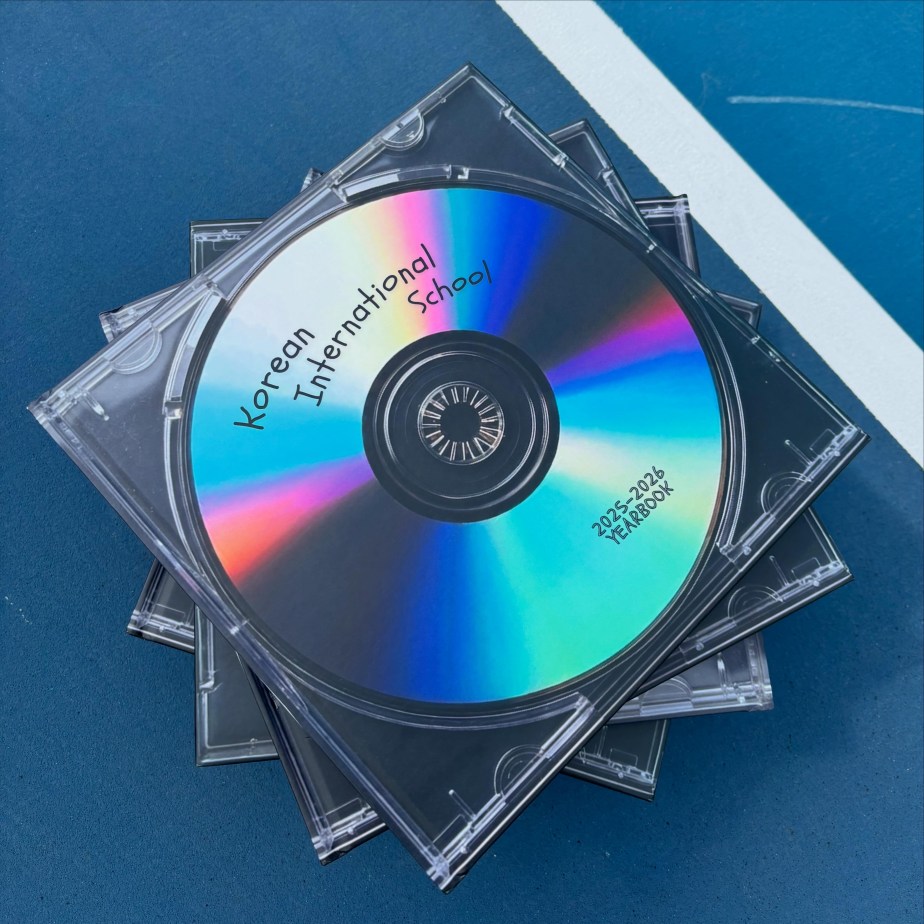
The yearbook has gone to print. The 600-plus copies of that 300-page hardcover behemoth have been delivered, distributed, and are now probably gathering dust on shelves or being passed around at graduation parties. And for the first time in months, I can breathe.

Let’s be honest: the second year was easier. I had systems and templates. I knew which fonts to avoid and which deadlines were non-negotiable. The learning curve, once steep enough to induce mild panic, had flattened into something manageable. But easier does not mean easy. In the end, it was still a monumental undertaking—a labour of love that consumed more evenings and weekends than I care to count.

So, why did I do it? And why, despite the exhaustion, am I genuinely sad to pass the baton?

The answer lies in what the yearbook allowed me to become: a part of this school’s community in a way that my usual corridors simply couldn’t offer.

I’m a secondary humanities teacher and a Head of Year. My days are spent in the older years, wrestling with the intricacies of the Cold War and the pastoral needs of teenagers navigating their final school years. It’s a wonderful, all-consuming world. But the yearbook project pried open the doors to rooms I’d never have stepped into otherwise.

I sat with admin to discuss financing, navigating the delicate dance of student and parent payments. I worked with the parent committee, receiving their messages of support and occasional gentle nudges about deadlines. I coordinated with the athletics department to ensure their year of sporting triumphs was properly memorialised. I liaised with the primary section, whose youngest contributors I would never have met otherwise—and whose enthusiasm for their own class photos was genuinely infectious. I discovered the incredible work happening in the Springboard section, celebrating their students’ successes with the same pride I feel for my own A-Level historians. I coordinated with facilities for the delivery and receipt of those 600+ books, a logistical dance that involved more heavy lifting than any of my lesson plans ever require.

In short, I got to extend myself beyond secondary humanities and pastoral. I became a small part of the entire school’s story, not just my corner of it.

There were moments of pure joy. Seeing a primary student’s face light up when they spotted their photo in the final product. Receiving a message from a grateful parent. The quiet satisfaction of a well-organised spreadsheet. But mostly, there was the feeling of being connected—to people I’d normally just pass in the corridor, to departments whose work I’d only glimpsed from afar.

I’m very happy to pass this responsibility on to a colleague. They have new ideas, fresh creativity, and the energy to implement them. I won’t pretend to be entirely detached—I’ll probably still peek at the drafts and offer an unsolicited opinion or two. But this is their project now, and I’m excited to see where they take it.

As for me, I’m back to my usual haunts: the secondary corridor, the history classroom, the pastoral office. But I’ll carry the lessons of this year with me. The school is bigger than I thought. Its people are more wonderful than I knew. And sometimes, the best way to serve is to step outside your own little classroom and help tell the story of everyone else’s.

Now, to find a quiet corner and finally read the yearbook the students and I spent a year creating. We might’ve missed a few events and definitely overlooked a typo or two (sorry Kirsten!). But I’m pretty sure we captured the heart of it.

The First Draft: On Building a Classical Studies Course from the Ground Up

The light is different now. The sharp, golden clarity of a Hong Kong autumn has settled in, and with it, a certain quiet. The frantic energy of the 2025 October/November exam series has dissipated, leaving behind that peculiar, post-campaign stillness that Alexander must have felt after reaching Hydaspes. The battlefield of past papers and revision notes has been cleared away, and in the quiet, I’ve been thinking about what we’ve just built.

This past cycle of teaching Cambridge’s Classical Studies 9274 felt less like teaching a prescribed course and more like building a ship while already out at sea. The blueprint was the syllabus, yes, but the timber and the nails—the very substance of it—we had to fashion ourselves.

The most palpable challenge was the silence. Not the silence of a focused classroom, but the vast, echoing silence of a subject without a definitive textbook. It’s a peculiar kind of vertigo, standing in front of a class and knowing that the canonical resource they’re relying on is the one you stayed up past midnight formatting, the one with your own marginalia embedded in the headers. I became less a deliverer of content and more its architect, obsessively cross-referencing my homemade workbooks with the CIE scheme of work, terrified that some crucial nuance of the Athenian legal system or a pivotal flaw in Trajan’s propaganda might slip through a crack I had created.

This was compounded by a professional solitude I hadn’t anticipated. Where were the other ship-builders? The online spaces and official CIE Support hubs where teachers typically congregate to share war stories and lesson plans were, for this course, not even ghost towns. They were non-existent. It felt like just me and my 3 students, our little vessel, and a great wide ocean of curriculum.

And the calendar itself, as CIE only offers November series exams for this course, felt like a contraption designed to test our mettle. Compressing a two-year AS/A2 journey into little over a year created a peculiar, accelerated rhythm. Our summer “break” was punctuated by the faint chime of a Teams call connecting, my students’ faces blinking onto my screen from a beach in Korea, a family home in Romania, and a sleepy town in Canada, all of us trying to untangle the complexities of Homeric heroes from our scattered corners of the world. There was something beautifully anachronistic about discussing ancient myths while we were all so decidedly, digitally nomadic.

But this is where the magic, stubborn thing, took root.

Building something from scratch means you get to see the flaws in the first draft—and you are granted the rare, immediate privilege of a second draft. The lessons from this pioneer cohort are not abstract notes for some distant future; they are immediate, actionable blueprints for the students who walked in the following August. That initial, frantic build has now given way to thoughtful renovation. For example, I immediately changed the Paper 2 topic from Roman Architecture to Augustus. Ultimately, a single man’s rise to power is easier to comprehend than the unimaginable construction of some of the world’s greatest ancient remains. Additionally, I assigned the 25-26 cohort ALL of Plutarch’s Life of Alexander in the summer between their IGCSE and A-Levels. This saved us considerable time and allowed us to hit the ground running in Term 1.

The greatest unexpected yield, however, was the depth of the relationship forged in that pressure cooker. There’s no time for the formalities of a slow-burn academic relationship when you’re navigating such treacherous waters on a tight schedule. We became a tight-knit crew, fast. And the pride I feel is not the distant, professional satisfaction of a job completed, but something far more visceral. It’s the swelling, almost Priam-like pride of seeing them achieve something monumental, something they themselves might have doubted was possible in such a short span.

The light is shifting on my desk. The afternoon is waning, and there are new workbooks to refine, new primary sources to discover for the next cohort. The ship, though tested, is seaworthy. And I can’t wait to see where we sail next.

A Yearbook to Remember

My First Year as Coordinator at an International School

When I was entrusted with the role of yearbook coordinator at an International School in Hong Kong, I knew it would be a rewarding challenge. While the team embarked on a journey to craft a vivid, 200-page memento that would capture the essence of our primary, springboard, and secondary school communities, I also started to develop a robust and lasting extra-curricular for our students.

Prior to this year, the school had not had a dedicated yearbook club or production process driven by students. It was up to me and my team to establish a foundation for what would become an annual tradition. From the outset, our small but passionate group tackled every aspect of the yearbook’s production with meticulous care and creativity.

We meticulously organised school photographs, class pages and student interviews, weaving together a tapestry of experiences that would resonate with our readers. The design process was a true collaborative effort, as we thoughtfully curated the layout and content of each page to bring our vision to life.

Watching the yearbook take shape was a profoundly fulfilling experience. With each new section and spread, we poured our hearts into preserving the unique spirit of our international school. The vibrant class pages, featured articles, and eye-catching advertisements all came together to create a glossy, hardcover keepsake that exceeded our wildest expectations.

The true reward, however, came when we distributed the finished yearbooks to our students and their families. The joy and pride on their faces as they thumbed through the pages was a testament to the power of our collective efforts. This tangible memento had become a lasting symbol of the community we had worked so hard to capture. I can’t begin to express how I appreciated seeing students hugging their yearbooks as they walked from class to class, asking peers and teachers to sign the covers.

As I look ahead to next year’s yearbook, I’m filled with excitement and a renewed sense of purpose. In my second year as coordinator, I’m eager to build upon the foundation we’ve laid, with a focus on increasing student involvement and establishing a lasting structure of leadership and mentorship. By empowering more of our talented students to take an active role in the yearbook’s production, I’m confident we can create an even more impressive and meaningful keepsake that truly captures the vibrant spirit of our international school community.