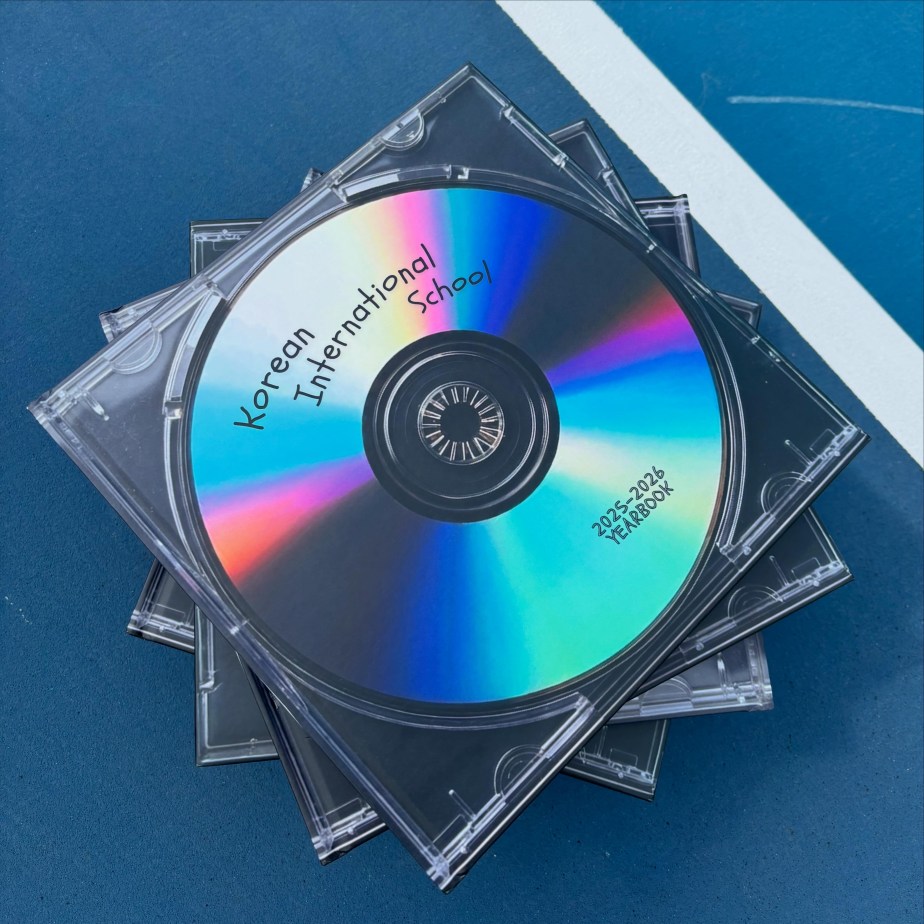
One Final Yearbook

The yearbook has gone to print. The 600-plus copies of that 300-page hardcover behemoth have been delivered, distributed, and are now probably gathering dust on shelves or being passed around at graduation parties. And for the first time in months, I can breathe.

Let’s be honest: the second year was easier. I had systems and templates. I knew which fonts to avoid and which deadlines were non-negotiable. The learning curve, once steep enough to induce mild panic, had flattened into something manageable. But easier does not mean easy. In the end, it was still a monumental undertaking—a labour of love that consumed more evenings and weekends than I care to count.

So, why did I do it? And why, despite the exhaustion, am I genuinely sad to pass the baton?

The answer lies in what the yearbook allowed me to become: a part of this school’s community in a way that my usual corridors simply couldn’t offer.

I’m a secondary humanities teacher and a Head of Year. My days are spent in the older years, wrestling with the intricacies of the Cold War and the pastoral needs of teenagers navigating their final school years. It’s a wonderful, all-consuming world. But the yearbook project pried open the doors to rooms I’d never have stepped into otherwise.

I sat with admin to discuss financing, navigating the delicate dance of student and parent payments. I worked with the parent committee, receiving their messages of support and occasional gentle nudges about deadlines. I coordinated with the athletics department to ensure their year of sporting triumphs was properly memorialised. I liaised with the primary section, whose youngest contributors I would never have met otherwise—and whose enthusiasm for their own class photos was genuinely infectious. I discovered the incredible work happening in the Springboard section, celebrating their students’ successes with the same pride I feel for my own A-Level historians. I coordinated with facilities for the delivery and receipt of those 600+ books, a logistical dance that involved more heavy lifting than any of my lesson plans ever require.

In short, I got to extend myself beyond secondary humanities and pastoral. I became a small part of the entire school’s story, not just my corner of it.

There were moments of pure joy. Seeing a primary student’s face light up when they spotted their photo in the final product. Receiving a message from a grateful parent. The quiet satisfaction of a well-organised spreadsheet. But mostly, there was the feeling of being connected—to people I’d normally just pass in the corridor, to departments whose work I’d only glimpsed from afar.

I’m very happy to pass this responsibility on to a colleague. They have new ideas, fresh creativity, and the energy to implement them. I won’t pretend to be entirely detached—I’ll probably still peek at the drafts and offer an unsolicited opinion or two. But this is their project now, and I’m excited to see where they take it.

As for me, I’m back to my usual haunts: the secondary corridor, the history classroom, the pastoral office. But I’ll carry the lessons of this year with me. The school is bigger than I thought. Its people are more wonderful than I knew. And sometimes, the best way to serve is to step outside your own little classroom and help tell the story of everyone else’s.

Now, to find a quiet corner and finally read the yearbook the students and I spent a year creating. We might’ve missed a few events and definitely overlooked a typo or two (sorry Kirsten!). But I’m pretty sure we captured the heart of it.

IGCSE History Flashcards: Essential Key Terms for Success

My first ever IGCSE History cohort wrote Paper 1 today. I might have been more nervous than they were.

This was the first time I experienced the joy of teaching a full exam level my favourite subject. These students were a delight—all (just) six of them are bright young minds with a passion for the world at large. It has been the greatest honour witnessing them develop and improve over the last two years.

To celebrate this special day, here’s the IGCSE 0470 History key terms flashcards (Option B: Twentieth Century, Germany Depth Study) I made them. Enough time was sunk into aligning every word to make it a shame if only a handful of students ever used them. Good luck to all young historians out there. One more paper to go!

The First Draft: On Building a Classical Studies Course from the Ground Up

The light is different now. The sharp, golden clarity of a Hong Kong autumn has settled in, and with it, a certain quiet. The frantic energy of the 2025 October/November exam series has dissipated, leaving behind that peculiar, post-campaign stillness that Alexander must have felt after reaching Hydaspes. The battlefield of past papers and revision notes has been cleared away, and in the quiet, I’ve been thinking about what we’ve just built.

This past cycle of teaching Cambridge’s Classical Studies 9274 felt less like teaching a prescribed course and more like building a ship while already out at sea. The blueprint was the syllabus, yes, but the timber and the nails—the very substance of it—we had to fashion ourselves.

The most palpable challenge was the silence. Not the silence of a focused classroom, but the vast, echoing silence of a subject without a definitive textbook. It’s a peculiar kind of vertigo, standing in front of a class and knowing that the canonical resource they’re relying on is the one you stayed up past midnight formatting, the one with your own marginalia embedded in the headers. I became less a deliverer of content and more its architect, obsessively cross-referencing my homemade workbooks with the CIE scheme of work, terrified that some crucial nuance of the Athenian legal system or a pivotal flaw in Trajan’s propaganda might slip through a crack I had created.

This was compounded by a professional solitude I hadn’t anticipated. Where were the other ship-builders? The online spaces and official CIE Support hubs where teachers typically congregate to share war stories and lesson plans were, for this course, not even ghost towns. They were non-existent. It felt like just me and my 3 students, our little vessel, and a great wide ocean of curriculum.

And the calendar itself, as CIE only offers November series exams for this course, felt like a contraption designed to test our mettle. Compressing a two-year AS/A2 journey into little over a year created a peculiar, accelerated rhythm. Our summer “break” was punctuated by the faint chime of a Teams call connecting, my students’ faces blinking onto my screen from a beach in Korea, a family home in Romania, and a sleepy town in Canada, all of us trying to untangle the complexities of Homeric heroes from our scattered corners of the world. There was something beautifully anachronistic about discussing ancient myths while we were all so decidedly, digitally nomadic.

But this is where the magic, stubborn thing, took root.

Building something from scratch means you get to see the flaws in the first draft—and you are granted the rare, immediate privilege of a second draft. The lessons from this pioneer cohort are not abstract notes for some distant future; they are immediate, actionable blueprints for the students who walked in the following August. That initial, frantic build has now given way to thoughtful renovation. For example, I immediately changed the Paper 2 topic from Roman Architecture to Augustus. Ultimately, a single man’s rise to power is easier to comprehend than the unimaginable construction of some of the world’s greatest ancient remains. Additionally, I assigned the 25-26 cohort ALL of Plutarch’s Life of Alexander in the summer between their IGCSE and A-Levels. This saved us considerable time and allowed us to hit the ground running in Term 1.

The greatest unexpected yield, however, was the depth of the relationship forged in that pressure cooker. There’s no time for the formalities of a slow-burn academic relationship when you’re navigating such treacherous waters on a tight schedule. We became a tight-knit crew, fast. And the pride I feel is not the distant, professional satisfaction of a job completed, but something far more visceral. It’s the swelling, almost Priam-like pride of seeing them achieve something monumental, something they themselves might have doubted was possible in such a short span.

The light is shifting on my desk. The afternoon is waning, and there are new workbooks to refine, new primary sources to discover for the next cohort. The ship, though tested, is seaworthy. And I can’t wait to see where we sail next.

A Teacher’s Cameo & Celebrating Student Rockstars

When the showrunner of our school musical asked me to step into a tiny, surprise cameo role in Zombie Prom, I couldn’t resist. His vision? To spark a little extra magic by letting students spot a familiar face on stage. What I didn’t expect was just how much I’d be the one left starstruck.

Watching our cast and crew shine during production week was nothing short of awe-inspiring. These students rehearsed every Tuesday and Wednesday since October—then gave up their Saturdays for the final month—to bring this show to life. And wow, did it pay off. Their energy, talent, and professionalism blew me away: singers hitting soaring notes, dancers moving in perfect sync, actors embodying their roles with grit and heart. Absolute rockstars.

The best part? Seeing my own Year 7 students return for a second night, buzzing with excitement about the show. Their joy mirrored my own. Being part of this production wasn’t just about my silly 30-second role as the mother of a zombie’s teenage girlfriend—it was a reminder of how much creativity and connection thrive when we come together as a community.

School spirit isn’t just a phrase here. It’s the sweat, laughter, and roaring applause that filled that gym-turned-theater. Huge thanks to every student who made this musical unforgettable. You’ve set the bar sky-high!

Why take Classical Studies?

This time last year, my HOD and HOS asked me to make an options video for the new course I was launching in the Humanities Department—CIE A-Level Classical Studies. 

As an ex-journalism student, I was THRILLED to get a chance to reignite my creative chops and have a chance to play with my beloved Adobe Audition once again. The mini-project also forced me to think about how to make the course more relatable and appealing for KIS’ unique student population. I wrote and voiced the script with their particular interests in mind. 

Unfortunately, the video I produced will soon be out of commission because Marketing wants new specifications this year, aiming to create a more cohesive media presence. So… I’ll just archive it here.

Have you ever wondered, Why take Classical Studies?

Cold days and warm insights: Another term of teaching done

It’s 9°C in Hong Kong at the moment—veritably freezing for this little isle on the South China Sea—and the CNY holiday has gifted me with some respite to reflect on what might be my most satisfactory period of work to date.

Two years ago today, I was sitting in my considerably chillier Montréal apartment, working from home as a historical researcher, desperately trying to conquer the voices of the void. I loved the research, but I dearly missed teaching. There is something unquantifiably exciting about engaging with young students who are grappling with new ideas for the first time; collaborating with fellow educators who are passionate about the value they bring to a community; contributing to building a more positive microcosm of the school; and embracing the never-ending novelty of learning something every day.

January marks the end of the first term of my second year teaching at an international school in Hong Kong. Due to some career changes, a global pandemic, and some family matters, it’s actually the longest I’ve worked anywhere. This academic year is for other firsts as well: first time teaching humanities and first time serving as a Head of Year.

I had anticipated some challenges prior to taking on these new roles. Would I be able to keep up with all the new content knowledge required of my IGCSE and A-Level courses? (The answer was yes—I actually struggled more with economics within KS3 Social Studies.) Would I be able to prove that I deserved a leadership position in pastoral amongst the many more-experienced teachers at my school? (I hope so—this one I still struggle answering with critical self-empathy.) Could I do this on top of expanding the scope and success of the Yearbook Committee? (TBD—the full publication and distribution should be completed by June 2025.) Would I be able to juggle everything while also completing an assignment-heavy PGCE? (Yes—although I cannot say I did so happily.) Looking back, these challenges appear easily overcome.

Being able to combine my love of teaching with my love for history has been a large tenet of why this first term has been so successful. An astute IGCSE History student, H.N., has asked more than once “why does it seem like you don’t miss being an English teacher?” There’s nothing wrong with the subject of course—I love language and literature, and an aspect I miss more than others is how reading my students’ written work allowed me to know them a little more deeply. More than once, I responded to H.N.’s inquiry by making a joke about how I no longer know how to speak English.

But if I were to answer honestly, I would probably say… I have loved the study of the past since I took four separate history electives in my suburban Ontario high school. Or perhaps even earlier, when my dad brought me to Unionville Public Library during summer break, and I borrowed out my pre-teen weight’s worth of historical fiction. It could be further back still, when my wee brother and I sat with our feet dangling from the dining room table, listening to stories of our family’s diasporic paths. Being able to plan and deliver lessons for a subject I am so passionate about makes every workday a joyful one. Being able to geek out with fellow history enthusiasts brings out the child in me. Being able to inspire students who initially dislike the subject to change their minds is incredibly motivating!

This blog started as an exercise to prove to myself that I can still write without AI, but it seems that I have waffled for long enough. I’ve soliloquised for so long it is now 17°C and I can go enjoy the last of my break with a trip to the beach. Here’s hoping for another good term.

English Teacher Jumps Ship to Humanities

As I reflect on my path to this point in my career, I’m filled with a profound sense of excitement and gratitude. After years of honing my craft as an English teacher, I now have the incredible opportunity to embark on a new chapter, teaching humanities at my current international school.

My teaching journey began over a decade ago, when I first stepped into a kindergarten classroom in Qingdao, China. Those early years were both challenging and immensely rewarding, as I learned to connect with young learners and foster a love of language. From there, I moved to Hong Kong, where I started in the dark trenches of a learning centre and moved on to teach at a renowned local DSS secondary school, helping students of all ages reach their full potential.

Fast forward a few years, past a 12-month stint as a historical researcher in Montréal, I now find myself at an international school in Hong Kong with incredible mentors and leaders who gave me opportunity to teach KS3 social studies, IGCSE history, and A-Level classical studies. As I reflect on this transition, I can’t help but feel a sense of anticipation. “The study of history is the best way to understand the present,” as renowned philosopher Blaise Pascal once said, and looking back at my career these past few years, I couldn’t agree more.

Drawing on a MA in History and my experience working for a private historical consulting company, I plan to bring a unique perspective to the classroom. “History is not just a collection of facts and dates,” as historian Howard Zinn stated, “but a living, breathing narrative that shapes our world.” It is this ethos that I hope to impart to my students.

To that end, I have already begun designing posters that will adorn the walls of my future classroom, each one a vibrant representation of a different historical era or concept. “A people without the knowledge of their past history, origin and culture is like a tree without roots,” as Marcus Garvey once said, and these visuals will serve as touchstones, sparking the imagination and curiosity of my students, inviting them to dive deeper into the rich tapestry of the past.

As I await the start of the new school year, I find myself brimming with ideas and a renewed sense of purpose. “History is a relentless master of ceremony,” as President John F. Kennedy once observed, and I’m ready to guide my students through this captivating drama, inspiring them to become active participants in shaping the future.

Feel free to use them in your classroom as well!

A Yearbook to Remember

My First Year as Coordinator at an International School

When I was entrusted with the role of yearbook coordinator at an International School in Hong Kong, I knew it would be a rewarding challenge. While the team embarked on a journey to craft a vivid, 200-page memento that would capture the essence of our primary, springboard, and secondary school communities, I also started to develop a robust and lasting extra-curricular for our students.

Prior to this year, the school had not had a dedicated yearbook club or production process driven by students. It was up to me and my team to establish a foundation for what would become an annual tradition. From the outset, our small but passionate group tackled every aspect of the yearbook’s production with meticulous care and creativity.

We meticulously organised school photographs, class pages and student interviews, weaving together a tapestry of experiences that would resonate with our readers. The design process was a true collaborative effort, as we thoughtfully curated the layout and content of each page to bring our vision to life.

Watching the yearbook take shape was a profoundly fulfilling experience. With each new section and spread, we poured our hearts into preserving the unique spirit of our international school. The vibrant class pages, featured articles, and eye-catching advertisements all came together to create a glossy, hardcover keepsake that exceeded our wildest expectations.

The true reward, however, came when we distributed the finished yearbooks to our students and their families. The joy and pride on their faces as they thumbed through the pages was a testament to the power of our collective efforts. This tangible memento had become a lasting symbol of the community we had worked so hard to capture. I can’t begin to express how I appreciated seeing students hugging their yearbooks as they walked from class to class, asking peers and teachers to sign the covers.

As I look ahead to next year’s yearbook, I’m filled with excitement and a renewed sense of purpose. In my second year as coordinator, I’m eager to build upon the foundation we’ve laid, with a focus on increasing student involvement and establishing a lasting structure of leadership and mentorship. By empowering more of our talented students to take an active role in the yearbook’s production, I’m confident we can create an even more impressive and meaningful keepsake that truly captures the vibrant spirit of our international school community.

Why Teachers make excellent Project Managers

People often say teachers are superheroes. They probably say this because they know teachers are excellent project managers, just on on an educator’s salary. In fact, the skills that teachers possess from their years of experience in education can translate seamlessly into project management in any field. Here are five reasons why teachers make great project managers:

  1. Highly Organized: Teachers know how to prioritize tasks and manage their time effectively. They use tools like calendars, to-do lists, and project management software to stay on top of everything. For example, a teacher might use a project management software to keep track of multiple lesson plans and assignments for different classes, ensuring that each student’s needs are met.
  2. Skilled Multitasker: Teachers are adept at juggling multiple projects and keeping them all moving forward without letting anything fall through the cracks. They can switch gears quickly when necessary and stay focused on what’s most important at any given moment. In a typical semester, a teacher might be able to juggle grading papers; planning lessons; writing exams; coordinating tournaments; designing new curriculum; and managing a school-wide pep-rally simultaneously.
  3. Proactive Problem-Solver: Teachers are always looking ahead and anticipating potential issues that may arise. This allows them to take steps to mitigate any problems before they become major roadblocks to progress. Teachers get to know their students deeply and can anticipate that certain students will struggle with a specific topic and prepare alternative teaching methods to ensure their success.
  4. Strong Communicator: Teachers know how to keep partners and stakeholders informed of project status and progress, ensuring that everyone is on the same page. They regularly touch base with partners and stakeholders to ensure that their needs are being met and that they are working towards shared goals. Throughout the year, teachers communicate with parents about their child’s progress and work with them to create a plan for academic success.
  5. Collaborative Team Player: Teachers work closely with their colleagues to ensure that everyone is aligned and working towards the same goals. They are always willing to lend a hand and take on extra responsibilities when necessary. For example, a teacher might collaborate with other teachers to plan a school-wide event, ensuring that everyone’s contributions are valued and incorporated. The success of every student is a shared project.

Next time you’re looking for a project manager, consider a teacher for the job!

Unpacking an Educational Standard

A process used by educators to translate standards (such as the US Common Core) into lessons is called unpacking standards. It assists teachers in planning lessons and teaching strategies by breaking it down. It identifies (1) what students need to know and (2) what they need to do to demonstrate they are meeting the standard. To unpack a standard, it’s easiest to look at the verbs in the standard such as explain, compare, or construct. These verbs help you identify skills. The nouns in the standard help you identify the content that students should be learning.