A few months ago, I finally developed a roll of film from my time teaching in Qingdao during 2019-2020. Qingdao, also known as 青島, is a beautiful and bustling coastal city located in the northeastern province of Shandong, China. The city’s strategic position along the shores of the Yellow Sea has endowed it with a unique and internationally-influenced history.
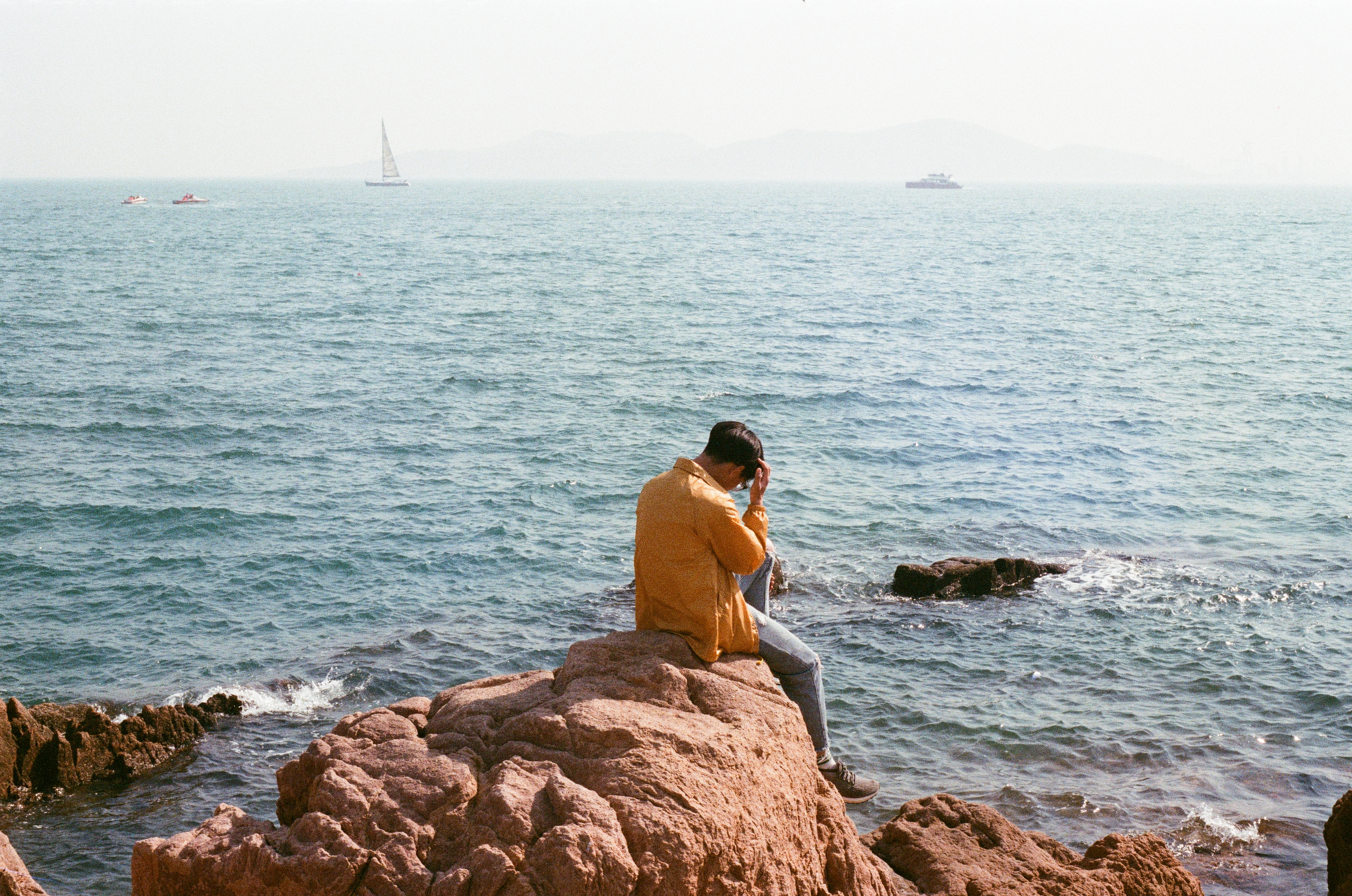
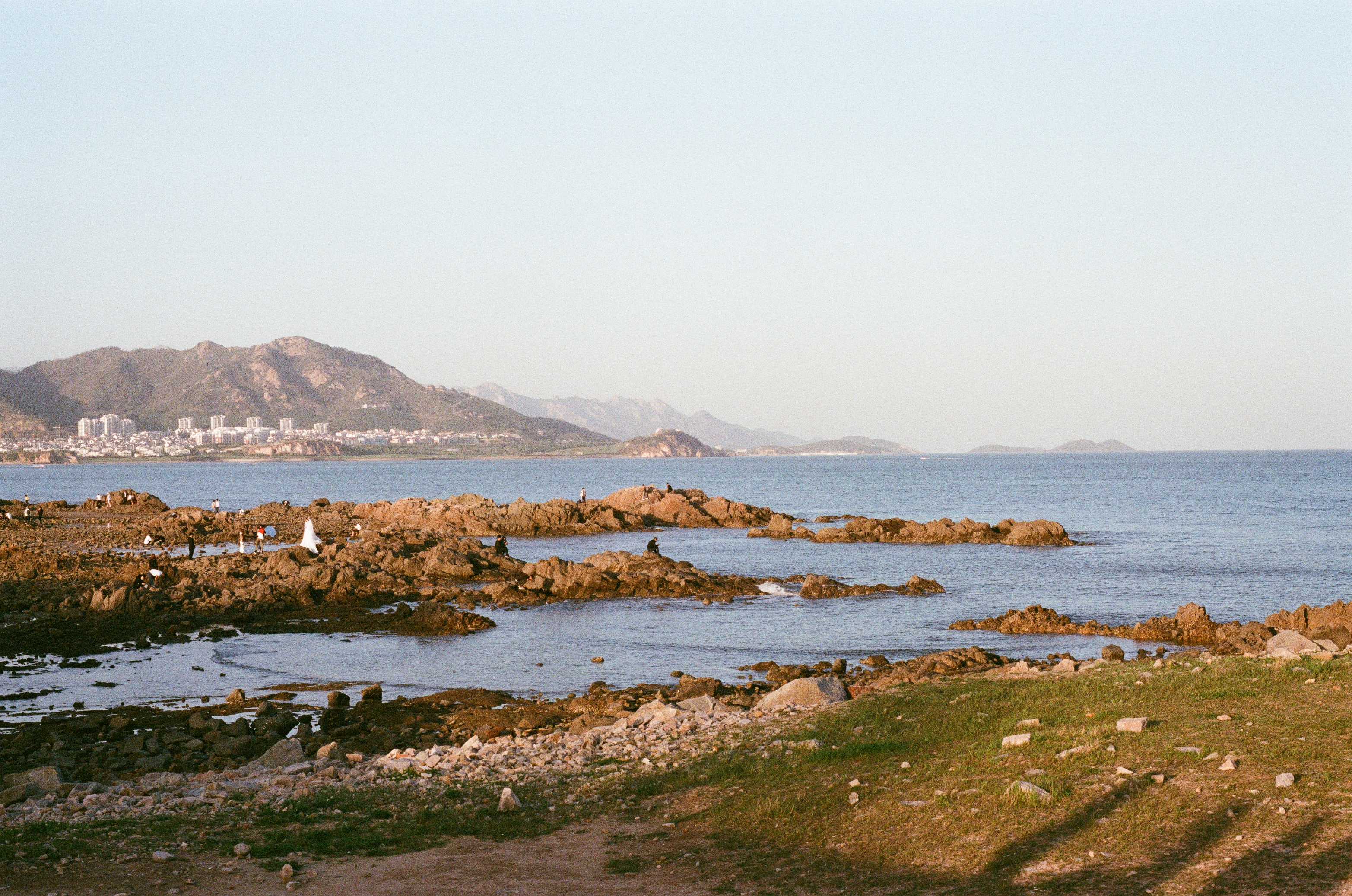
The photographs I captured in 2019 on my Olympus OM-2 using Kodak 400 film truly capture the natural beauty of Qingdao’s breathtaking shoreline, which was a highly contested land for centuries.. The city’s international history has imbued it with a distinct character, making it a fascinating and picturesque destination.
Here’s a little known history that involves China, Japan, Germany, Tiananmen protests and the Treaty of Versailles, told through some old pictures I took. Qingdao originated as a minor fishing village, and during the Qing dynasty (1644–1911/12) it developed a significant junk trade, with a customs station established there. In the 1880s, as the Chinese government set up the Beiyang (“North Ocean”) fleet, they recognized the strategic importance of the location of Qingdao (then known as Jiao’ao) and established a small naval station there, along with building fortifications.
After the devastating first Opium War, China was forced to open its ports to foreign trade. After two German missionaries were killed in 1897, Germany took control of Qingdao and the surrounding Shandong peninsula, establishing the Kiautschou Bay concession. Germany then developed Qingdao into an important economic and naval base.
During World War I, Japan seized the opportunity of Germany’s involvement in the war to occupy Qingdao in 1914. Following Germany’s defeat, the Treaty of Versailles in 1919 awarded the Kiautschou Bay concession to Japan. Japan then created the Tsingtao (Qingdao) Naval District and expanded the port’s infrastructure and industries.
After Japan’s defeat in 1945, Qingdao was returned to Chinese control. The city’s architectural and infrastructural legacy from the earlier German and Japanese colonial periods remains an important part of Qingdao’s cultural heritage today.
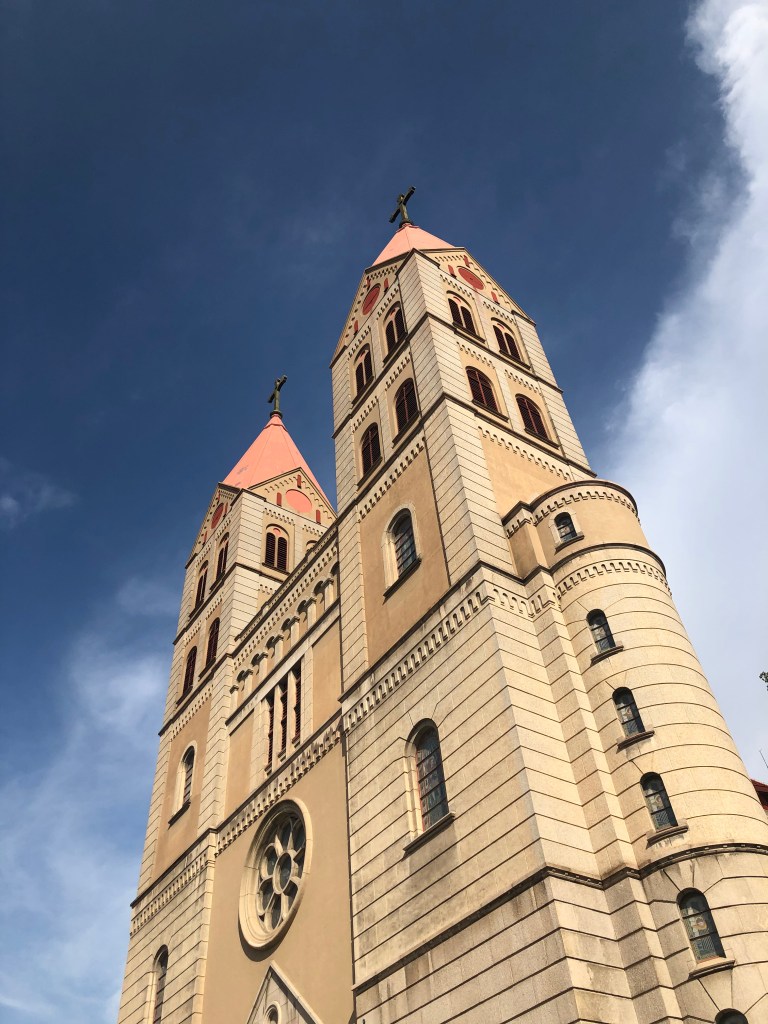
This imposing piece of Romanesque revival architecture is St. Michael’s Cathedral, also called Zhejiang Road Catholic Church. It was built by German missionaries in 1934.
This is the May Wind sculpture in May Fourth Square 五四广场, a major tourist attraction in downtown Qingdao. During the early 20th century, the May Fourth Movement was a pivotal student-led political and cultural movement that swept across China in 1919. The movement arose in response to the Treaty of Versailles, which awarded German colonial holdings in Shandong province to Japan rather than returning them to Chinese control.
In Qingdao, which had been a German and then Japanese colonial holding, the May Fourth Movement resonated deeply. The city’s students and citizens took part in the widespread protests and demonstrations that defined the movement across China.
To commemorate Qingdao’s role in this pivotal moment of Chinese history, a sculpture was erected in the city’s central square. The May 4th Monument features a towering figure representing the student-led movement, symbolizing the city’s resistance to foreign imperialist control and its embrace of Chinese nationalism and modernization.
The monument stands as a testament to Qingdao’s complicated colonial past and its people’s struggle for self-determination. It serves as a powerful reminder of the city’s important place in the broader narrative of China’s 20th century political and social transformation.
Qingdao has a complex history of shifting colonial control, first by Germany and then by Japan, before ultimately returning to Chinese rule. This legacy has significantly shaped the development and character of the city. It was a beautiful place to kick off my international teaching career.
As I reflect on my path to this point in my career, I’m filled with a profound sense of excitement and gratitude. After years of honing my craft as an English teacher, I now have the incredible opportunity to embark on a new chapter, teaching humanities at my current international school.
My teaching journey began over a decade ago, when I first stepped into a kindergarten classroom in Qingdao, China. Those early years were both challenging and immensely rewarding, as I learned to connect with young learners and foster a love of language. From there, I moved to Hong Kong, where I started in the dark trenches of a learning centre and moved on to teach at a renowned local DSS secondary school, helping students of all ages reach their full potential.
Fast forward a few years, past a 12-month stint as a historical researcher in Montréal, I now find myself at an international school in Hong Kong with incredible mentors and leaders who gave me opportunity to teach KS3 social studies, IGCSE history, and A-Level classical studies. As I reflect on this transition, I can’t help but feel a sense of anticipation. “The study of history is the best way to understand the present,” as renowned philosopher Blaise Pascal once said, and looking back at my career these past few years, I couldn’t agree more.
Drawing on a MA in History and my experience working for a private historical consulting company, I plan to bring a unique perspective to the classroom. “History is not just a collection of facts and dates,” as historian Howard Zinn stated, “but a living, breathing narrative that shapes our world.” It is this ethos that I hope to impart to my students.
To that end, I have already begun designing posters that will adorn the walls of my future classroom, each one a vibrant representation of a different historical era or concept. “A people without the knowledge of their past history, origin and culture is like a tree without roots,” as Marcus Garvey once said, and these visuals will serve as touchstones, sparking the imagination and curiosity of my students, inviting them to dive deeper into the rich tapestry of the past.
As I await the start of the new school year, I find myself brimming with ideas and a renewed sense of purpose. “History is a relentless master of ceremony,” as President John F. Kennedy once observed, and I’m ready to guide my students through this captivating drama, inspiring them to become active participants in shaping the future.
Exactly one year ago today, I returned to Ottawa from a research trip in Hong Kong.
Those two-and-a-half weeks were spent lugging camera equipment around the crowded city to interview participants who had something to say about migration, diaspora, and traditional Chinese medicine. That is casting a wide net, as most Hong Kongers have like had experiences and memories–personal or intergenerational–about all three.
On this one year anniversary, I thought I would share some snapshots I took on the trip.
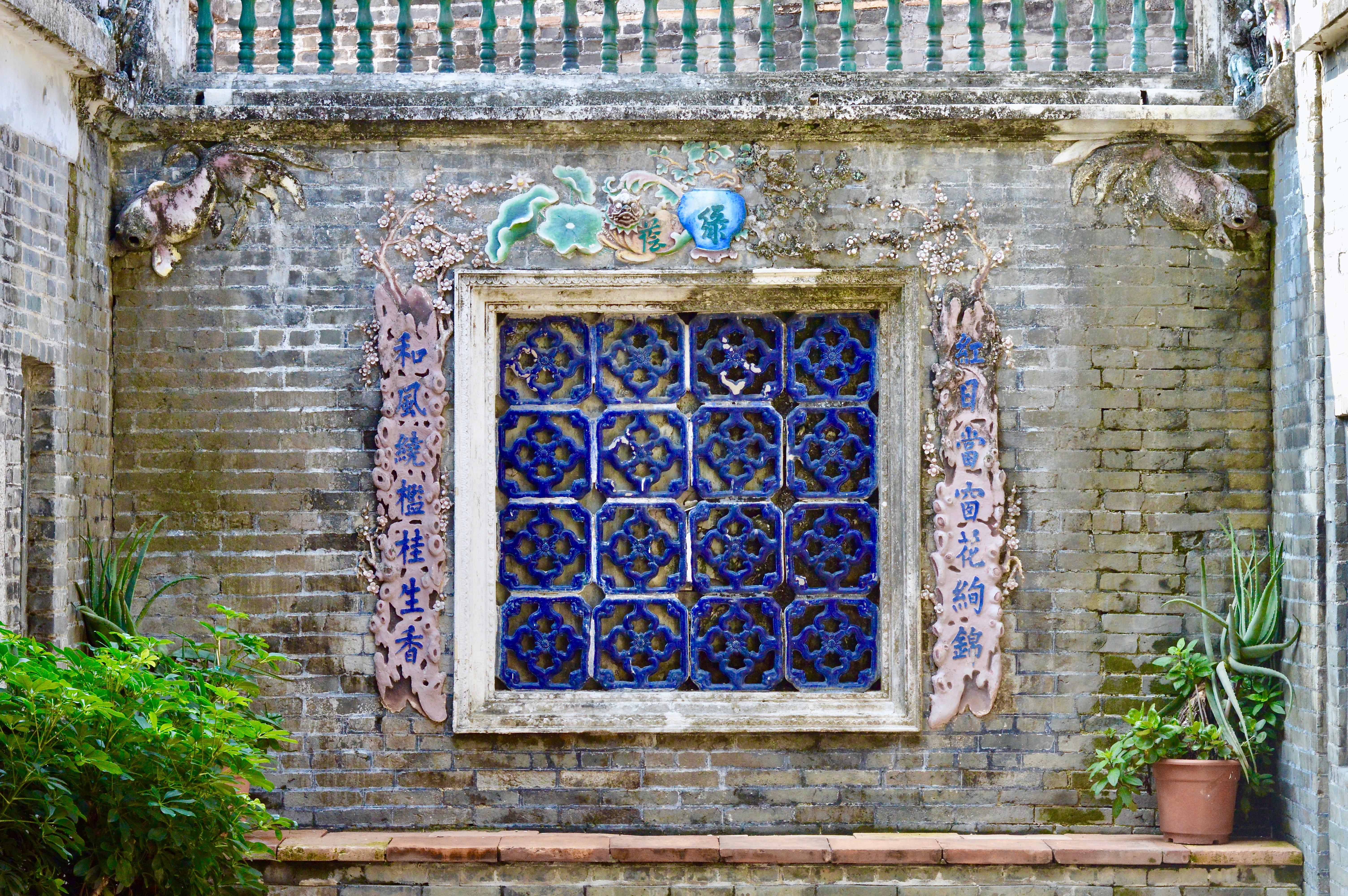
Ornate window in one of the the centuries old walled villages of Yuen Long District in Hong Kong. Jenn Ko, 2017.
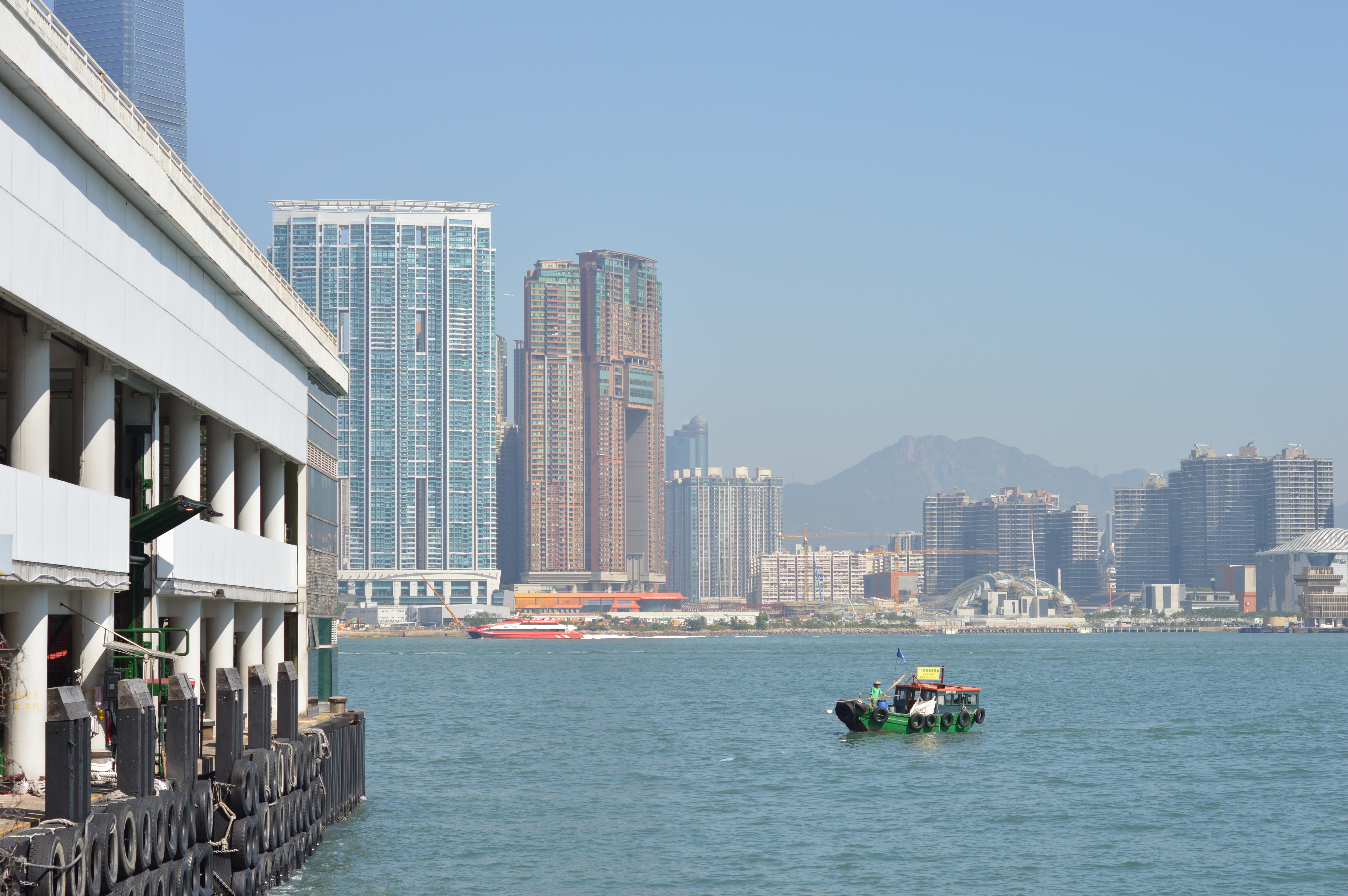
Waiting for the ferry to Lamma Island. Jenn Ko, 2017.
Hardware shops in Hong Kong are nothing like the giant Home Depots here in Canada. They’re cramped, packed full, and bursting with textures and colours. Jenn Ko, 2017.
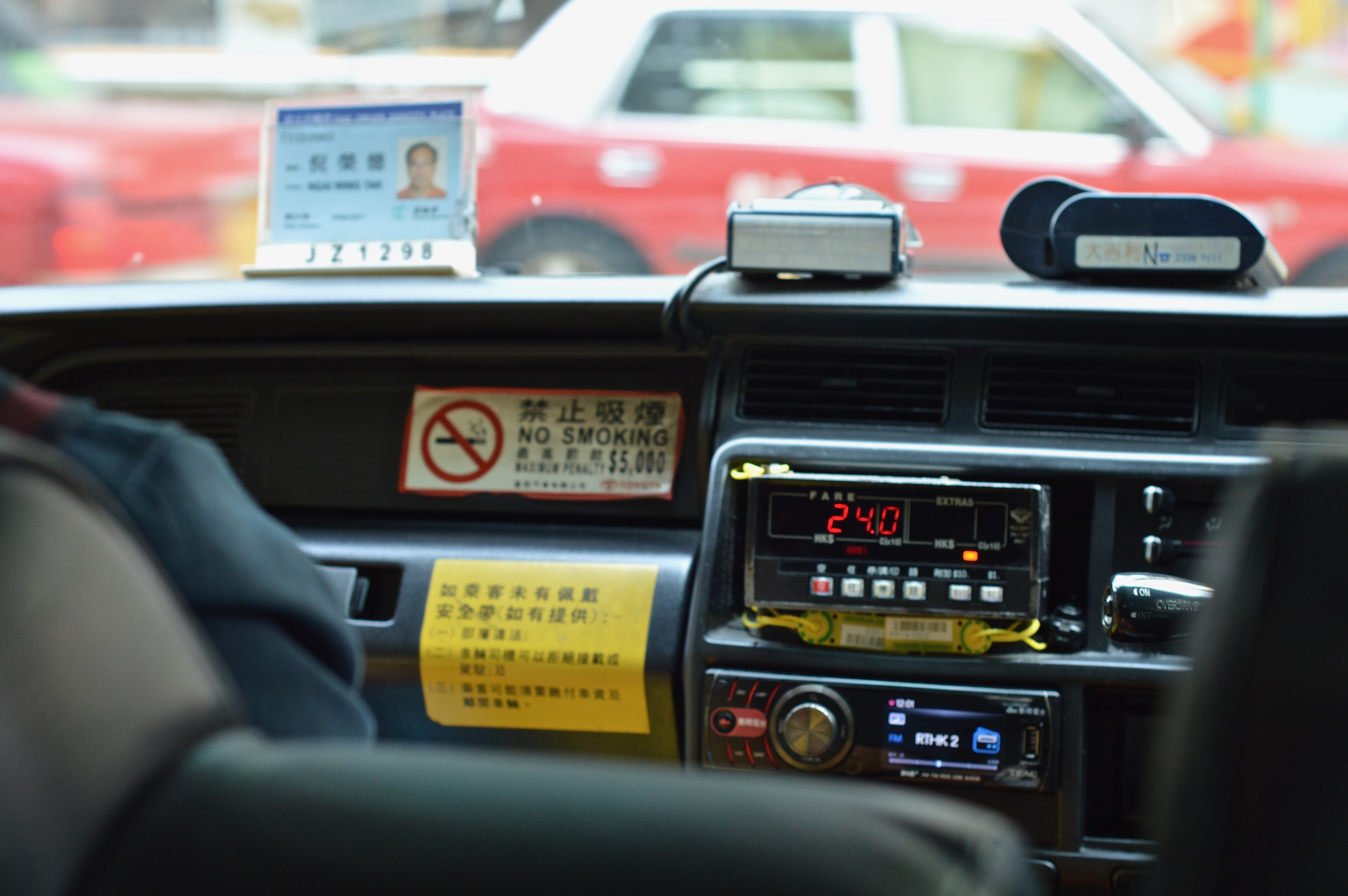
Inside one of the iconic taxis. Jenn Ko, 2017.
Pok Fu Lam village of 2018 looks a lot like it did before the islands of Hong Kong were ceded to the British empire over 150 years ago. It is one of the oldest in the city and is designated on the World Monuments Fund’s Watch List of places to be preserved. Parts of the village are considered squatter settlements. It even lacks a modern sewage system. Efforts to conserve its architectural heritage face pushes for land development in the crowded and growing metropolis. Jenn Ko, 2017.
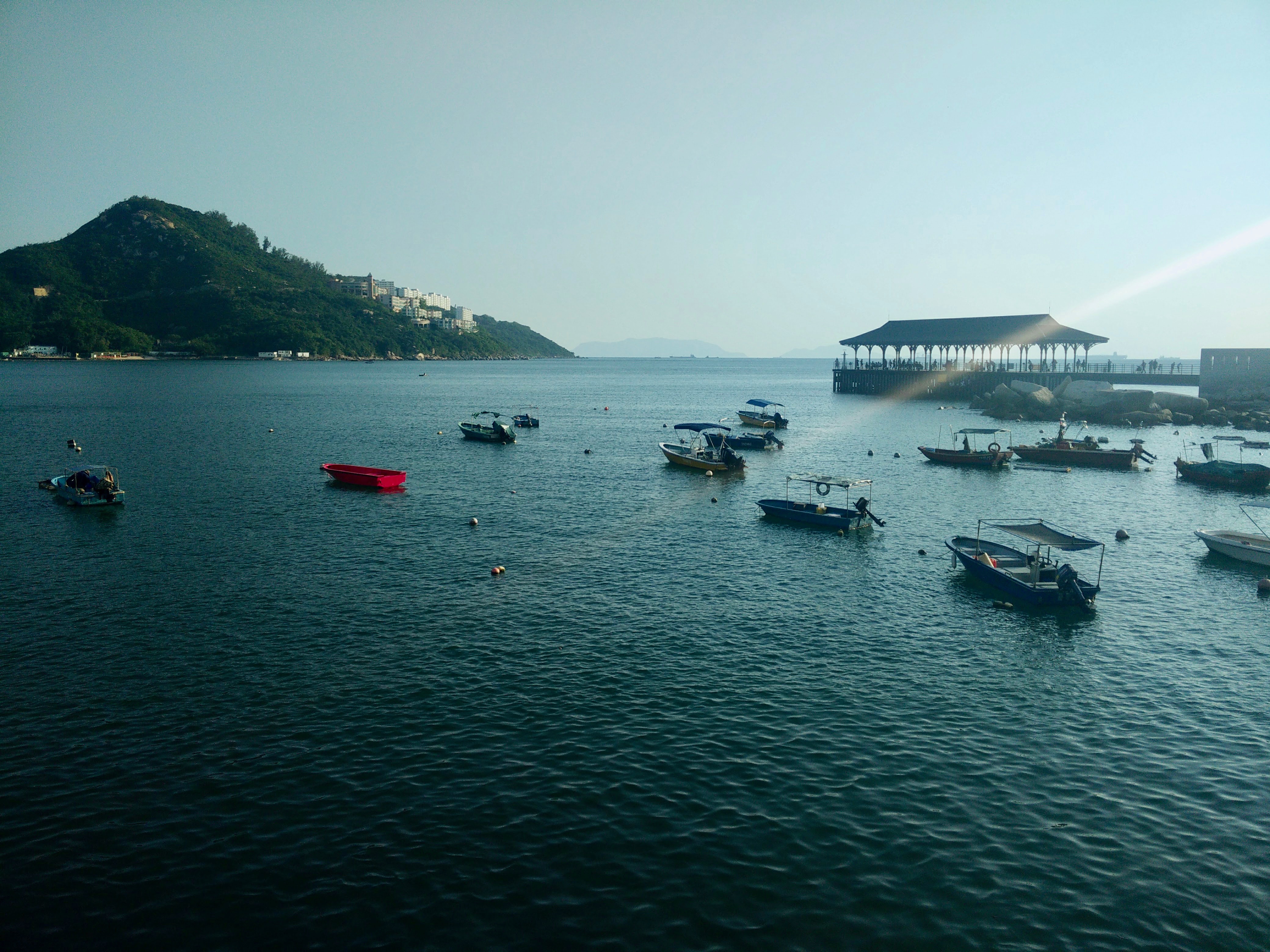
Blake Pier, the ever-popular tourist destination of Stanley Bay. The pier was named after Sir Henry Arthur Blake, the twelfth governor of Hong Kong. Jenn Ko, 2017.
During my defence, someone on my examination board asked me an interesting question.
What is an an authentic TCM?
The wonderful thing about the defence is the freedom and space to reexamine and reconsider issues you yourself may not have considered yourself. Answering the examiner’s question led me to put together an important part of my final conclusion.
The question of authenticity in TCM is recurring throughout this thesis. On a practical level, governments (wanted) to legislate and regulate TCM to assure safety and authenticity for public health. On a personal level, TCM users questioned the authenticity and efficacy of the herbal medicines they were purchasing and consuming. An authentic TCM in a greater global, historical context, however, is a more delicate matter and therefore problematic to define. Considering Schechner’s concept of “twice-behaved” behaviour, each reiteration of an act is a novel original; authentic from the first. This begs the question—what was the first “behaved” iteration of traditional Chinese medicine? Perhaps one could credit the 2,000 year old Yellow Emperor’s Inner Canon or Huángdì Nèijīng (黃帝內經) as the first authentic record of TCM, but the book itself is based on nearly 4,500 years of practice.
Perhaps Nora would recognize this set of ancient, communal practices on which the Yellow Emperor’s Inner Canon is basedas acceptably authentic milieux. Scholars and TCMPs have termed the practice of TCM in pre-Cultural Revolution in China and preserved elsewhere in post-Cultural Revolution Chinese diasporas “Classic” Chinese medicine. However, this claim would negate the authenticity of translocal reiterations of TCM, which have morphed and adapted to regional environments in Hong Kong, Taiwan, and Toronto, for example. In the same vein, my participants expressed a belief that TCM preserved in the peripheries is measured as more authentic than TCM in modern China, which has been systematically blended with Western medicine. Nevertheless, such comments disregard the periphery’s own disparate pathways to the westernization of TCM. Thus, this thesis argues that there is a singular ‘authentic’ TCM does not exist, as each iteration of the practice is as validly genuine as the other.
Debates about authenticity have implications for belonging and otherness in cultural identity and the construction of Chineseness. Claims to authenticity have been used by power-wielding entities to position TCM practitioners and users between legitimate and illegitimate, us and them. In early twentieth century China, various governments attempted to regulate practice and practitioners to carve and sculpt the populace into their vision of a modern China. Towards the end of the twentieth century in Ontario, the Ontario government regulated TCM in an effort to gently fit practice and practitioners cohesively into the larger Canadian medical system. Therefore, accepting that authenticity in TCM is amorphous, uneven, and in constant renegotiation, one could also postulate that Chineseness is similarly resistant to clear definition.
This post is Part Three of a five-part series, where I use a blog format to present and elaborate themes less-explored in my M.A. in History thesis.
This post is adapted from my Master’s thesis, entitled “Negotiating Chineseness in Diaspora: Traditional Chinese Medicine and Memory in Hong Kong and the Greater Toronto Area, 1960-2018”. This post is Part One of a five-part series, where I use a blog format to present and elaborate themes less-explored in my M.A. in History thesis. Part One: Introduction
Migrant memories of traditional Chinese medicine
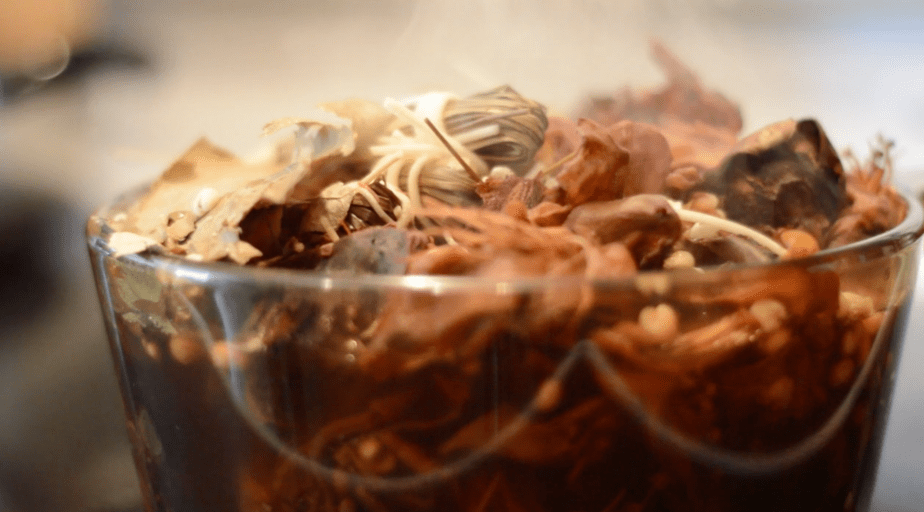
Imagine this. A small child with a head of thick, raven hair gets an annoying cough and a drippy nose. At five or six years old, they are a little over a metre in height—barely tall enough to see over an imposing object in the kitchen. If the child stands on the tips of their toes they might be able to make out the image of someone very dear to them labouring over an odorous pot of boiling herbs and water.
Source: Jenn Ko
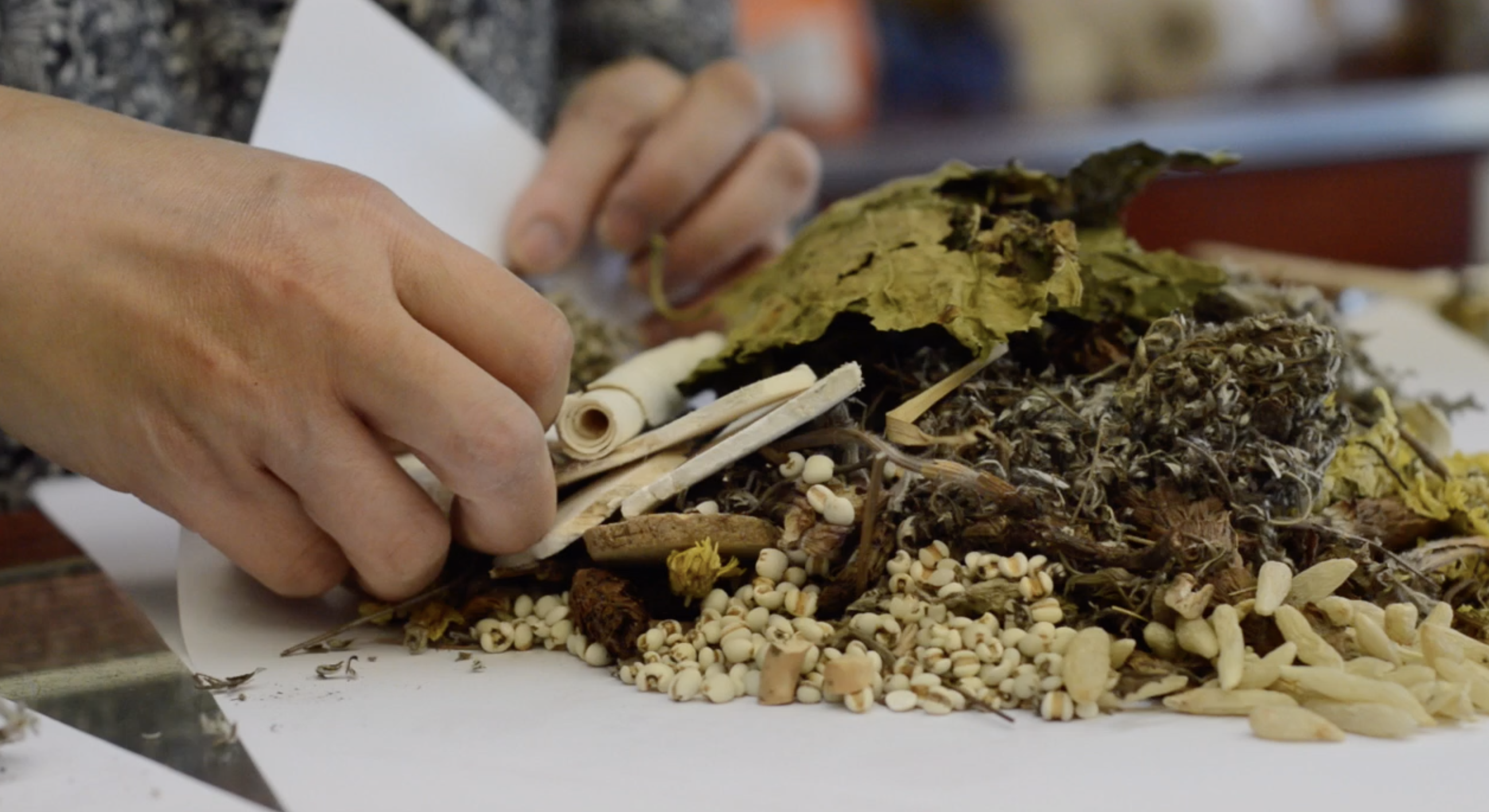
Only a few hours ago, they were in a similarly pungent space with jars packed full of dried herbs, fruits, seafood, insects and more. Imagine this small child was sat down in a chair, or if they are particularly small, in their dear someone’s lap, and made to face a doctor. The doctor took their pulse. The doctor looked at their tongue. Then, the doctor weighed out what looked like a cacophony of dried things and gave it to the child’s dear someone. They instruct the child to take it to return to harmony.
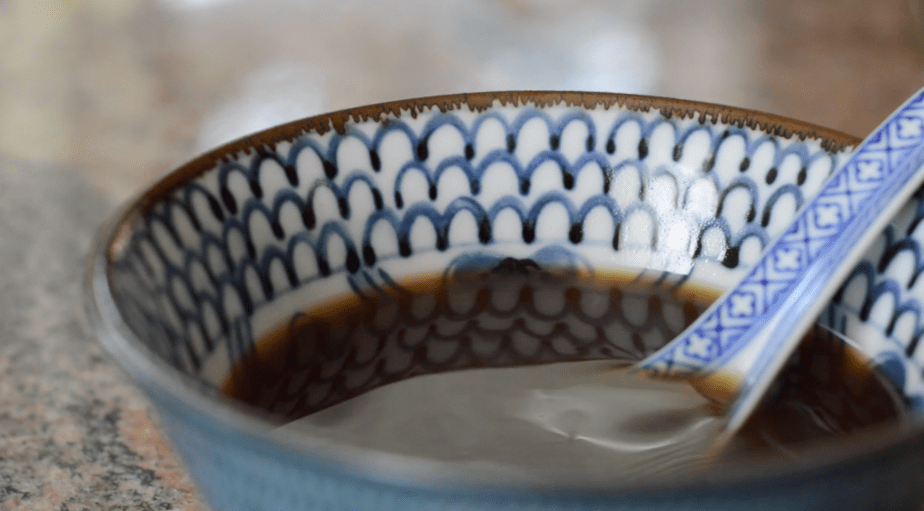
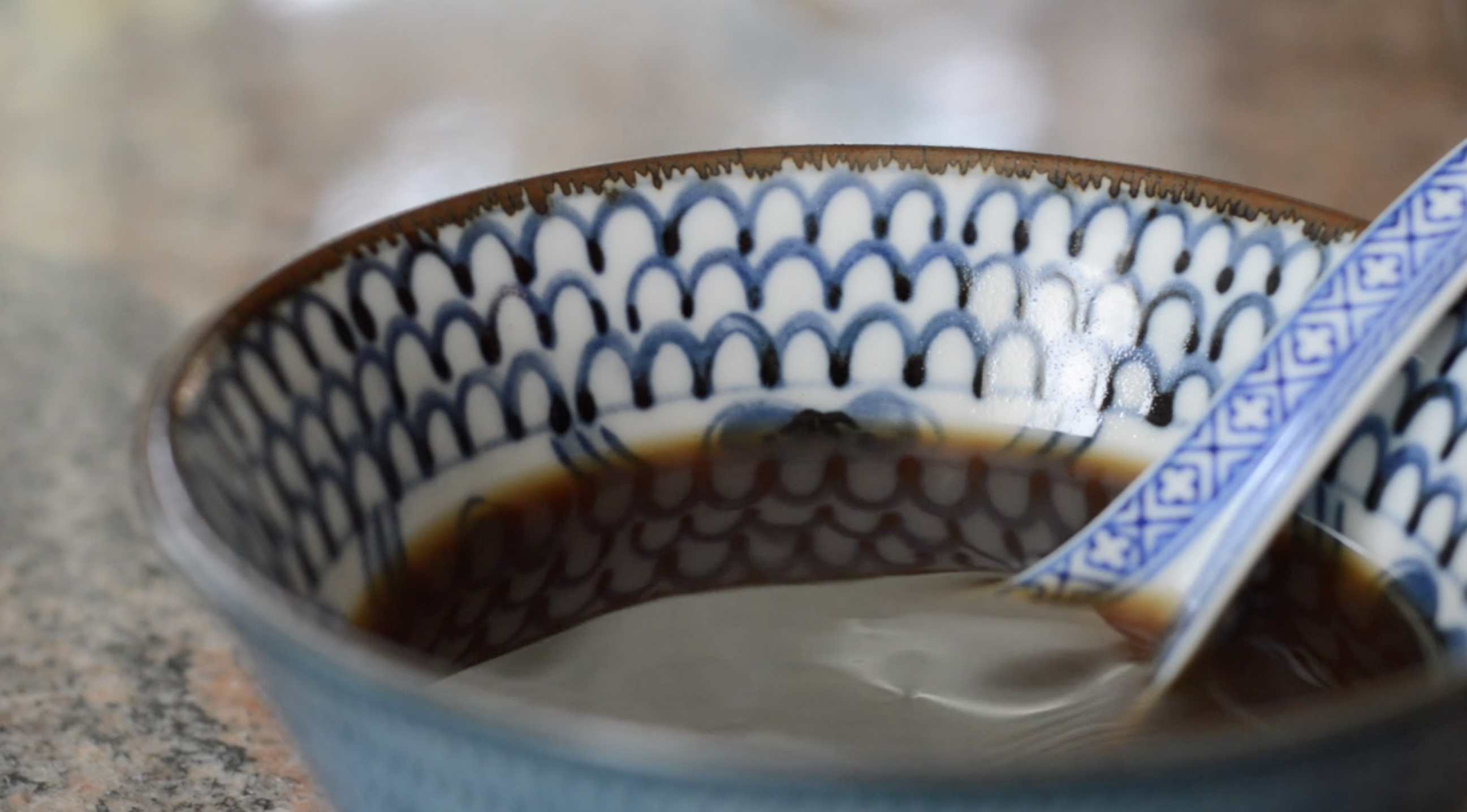
Now, imagine the kitchen again. The child’s dear someone pours the dark liquid into a bowl. The child takes a sip. It is bitter, but their dear someone might have placed some sweet, round, pinkish thin crisps on the table to eat with the bitter liquid. Haw Flakes 山楂餅 (sahn jah bang). The child is told to drink it all, and so they do.Every participant in my study shared a version of this narrative about being a child and being sick.
It is a memory so ubiquitous, so obvious, as common as the common flu.
Source: Jenn Ko
From fall 2016 to fall 2018, I studied the construction of cultural identity through the microcosmic perspective of traditional Chinese medicine (TCM) as culture for Chinese Canadians between two localities, Hong Kong and the Greater Toronto Area (GTA) for my Master’s research.I was interested in subjective questions of culture and identity. The main questions guiding my research were: what role(s) does traditional Chinese medicine play in cultural identity formation in trans-Pacific Chinese communities in Hong Kong and Toronto? How is the notion of Chineseness perceived, experienced, negotiated, and narrated by TCM practitioners and users? How do their perceptions, experiences, negotiations and narrations of TCM relate to family, caregiving, and community? I conducted 11 in-depth, face-to-face, oral history interviews conducted in Hong Kong and the Greater Toronto Area (GTA), 8 of which I analyzed in my actual thesis. I argue that Chineseness is found in the liminal spaces of their narrative identifications of self, their performances and transmission of knowledge in family, and their negotiation of Otherness in the TCM community in the GTA.
Traditional Chinese medicine is a liminal space where Chinese diasporic communities practice and express hybrid narrative cultural identities. The history of TCM is religious, socioeconomic, political, and deeply personal. TCM is an ancient form of healing built on a foundation of over thousands of years of practice. Sources range in the age of TCM knowledge and practice — it is likely 2,500 years old, but some say it could be 4,500 years old. It is comprised of herbal medicine, acupuncture, massage, cupping, moxibustion, exercise (eg. tai chi), and dietary therapy. At its most fundamental, the concept of TCM aims to balance two opposing principles in nature—feminine and negative 陰 (yin) and masculine and positive 陽 (yang)—to maintain the flow of vital life energy or 氣 (qi). TCM is not a monolithic canon of medicine as much as it is a “multi-sited, multidirectional, and sociohistorically contingent” set of practices and processes.
TCM is a system of knowledge of healing “made through—rather than prior to—various translocal encounters and from discrepant locations” (Zhan, 2009).
TCM arrived first in Canada with the immigration of Chinese workers in the mid-nineteenth century. In The Concubines Children, Denise Chong’s award-winning memoir about her grandmother May-ying’s struggle as an early immigrant in a Vancouver Chinatown, TCM was a consistent thread of daily life: “A line of pickle jars was her medicine cabinet […] For everyday use, to promote circulation, energy and vitality, were […] yuk choy, dong guai, ginseng and various grasses and tree barks” (Chong, 1996). In 1921, of the thirteen families among 2,035 documented Chinese in Toronto, three were herbalists (Chan, 2011). These early Chinese immigrants brought TCM with them in their suitcases, minds, and bodies in the form of texts, dried goods, seeds and more importantly—their rituals, practices, and memories. In Canada, herbal medicine and acupuncture are the most commonly practiced components of TCM.
Source: Jenn Ko
Today, TCM is no longer restricted to immigrants and a few rare believers—70% of the Canadian population has tried TCM at least once. In the GTA, dozens of TCM colleges and clinics serve Chinese and non-Chinese populations. The usage of TCM is also modernizing; consumers take capsules, tablets, and tinctures in lieu of the traditional process of brewing and drinking herbal tea.
Throughout its history, TCM has been used across socioeconomic identifications and demarcations. The rural poor of 1960s Hong Kong practiced TCM in daily life as affordable and accessible healthcare. The educated and more prosperous Chinese immigrants in present day GTA practice TCM as a part of their culture as they can optimize their health with the combined usage of Western medicine. The participants in my study use TCM as ritual health care in daily life and as medicine to address acute illness. In the GTA, immigrants connect to Chineseness through daily life performances of TCM for self and for family.
Source: Jenn Ko
The history of TCM in the GTA is intensely political. The evolution of TCM from those early ancient practices and texts has been affected by the geopolitical events in China in the early 20th century, from the conception of Chinese Western integrated medicine in the 1950s, to the abolition and persecution of TCM in the Cultural Revolution, to the modern system of combined traditional Chinese and Western medicine. It has been influenced by the politics surrounding the handover of Hong Kong in 1997, which would bring a ‘classic’ iteration of TCM to the GTA. It was influenced by Ontario regulation and the uneven negotiations of Chineseness within Chinese individuals and communities in the GTA. TCM has a translocal history influenced by capitalism, communism, movement and diaspora.
Traditional Chinese medicine is fiercely personal. It is a set of embodied practices rich with the subjective narratives of family and community, of personhood and identity.
TCM is embodied memory, affective practice, and transmitted knowledge—a basic part of Chinese diasporic life.
The heuristic examination of narratives of TCM practice in Chinese individuals in Hong Kong and the GTA opens a discursive space to explore diaspora, affect, and performance in their lived experiences. Hong Kong Chinese Canadian individuals living between Asia and Canada use their memories of TCM to perform, negotiate and transmit cultural capital. Chineseness is narrated in individuals, performed in familial roles, and negotiated in TCM communities.
People and practice are rooted in specific historical narratives influenced by real political, social, and economic events. They adapt as they traverse spatiotemporal routes. Both have the potential for healing and harm, flow multi-directionally, and are inscribed by generational memory. Like the Hong Kong Chinese diaspora in Toronto and Chinese Canadian diaspora in Hong Kong, traditional Chinese medicine also straddles constructed narratives of East and West. Placing these two elements—Chinese diaspora and traditional Chinese medicine—on either side of an imagined, conceptual mirror may coax out the interesting and meaningful differences and similarities in the myriad of reflections which comprise cultural identity.
This post is Part One of a five-part series, where I use a blog format to present and elaborate themes less-explored in my M.A. in History thesis.
References
Chan, Arlene. The Chinese in Toronto from 1878: From outside to inside the circle. Toronto, Dundurn: 2011.
Chong, Denise. The Concubine’s Children: Portrait of a Family Divided. New York: Penguin Books, 1996.
Zhan, Mei. Other-worldly: Making Chinese medicine through transnational frames. Durham, Duke University Press, 2009.
“Slaves, once sold as chattel, can become gradually humanized, personified, and reenchanted by the investiture of humanity.” – Arjun Appadurai
Appadurai first introduced the idea that the distinctions between persons and things oscillate and undulate throughout various temporal spaces in 1986 in a collection of essays titled The Social Life of Things. This idea, mentioned in passing in my previous blog post, dissolves the perceived binaries between commodity and singularity; person or thing.
Take for instance, the ethnographic museum’s relationship with indigenous peoples. Over time, the social trajectory of these peoples has shifted from being ethnographic material to source communities, as we call them today.
However, this discourse is not on the question of whether indigenous persons and human remains should be objects of entertainment or education in a museum. That question has already been answered with a clear and resounding “NO.” This discourse is on whether animals should be objects of entertainment or education in a natural history museum. This question tries to look for a similar negative affirmation that society can work towards for a distant temporal future.
As a caveat: this argument is in no way attempting to reduce indigenous peoples to the cheap commodity level society currently attributes to animals. Rather, my argument attempts to raise animals to the level of singularity enjoyed by humans. Obviously and most importantly, colonial institutions needs to first engage every available mind and dollar to foster reconciliation with Inuit, First Nations, and Metis peoples living on the land our settler society today calls Canada.
Observing the Museum of Nature in Ottawa as a critical museum visitor, as described and theorized by Lindauer, I found myself repeatedly examining the relationship between human curator, human visitor, and animal body and comparing it to the relationships of recent past between white curator, white visitor, and minority body or image.
The taxidermied and live animal displays, or as the museum calls them, live specimens are presented and received as indisputable fact. There were no obvious counterpoint discussions that explained the supposed ‘welfare’ or ‘ideal treatment’ of the encased animals.
A director of content for the museum discussed the evolving relationship between human and nature as one of the key focal points to integrate into the visitor experience, in accordance to evolving museum theory and societal norms. Humans as nature, she said. Nature as value — and not the sense of economic value, but that nature in itself has value. From my perspective this statement was a stark contradiction of the blissfully ignorant museum displays.
Lindauer, Margaret. “The critical museum visitor.” New museum theory and practice: An introduction (2006): 201-225.
“Artists, like curators, work on their own, grappling with their attempt to make a world in which to survive…. We are lonely people, faced with superficial politicians, with donors, sponsors…. I think it is here where the artist finds a way to form his own world and live his obsessions. For me, this is the real society.”
This summer, I was lucky to be working with the Canadian Tulip Festival as a curatorial assistant to create a small exhibition for the World Tulip Summit in October 2017 and the next Canadian Tulip Festival in May 2018. It was my job to research the history, search for artifacts, and write the exhibit text. The contract was only nine weeks long. If I’m being honest, I felt a little like a fish out of water. Off the stove and into the oven? I’m not great with idioms.
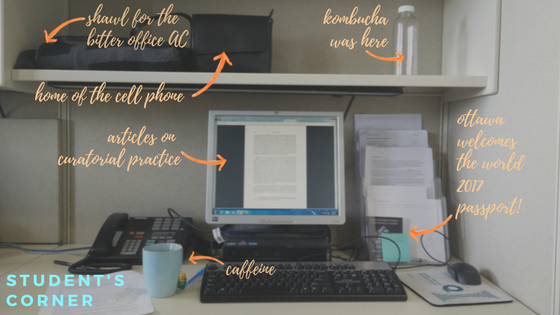
Most of the time, my student job looked like this:
There were few historical materials available to me at the beginning of my contract, as The Festival had recently moved into a small office space at in the Horticulture Building at Lansdowne. I spent the first week reading through a previous archive student’s notes and emailing local museums in hopes they may have some tulip-related artifacts in their collection. There was a noticeable void of material. In desperation, I decided to think out of the box and put out a call on Reddit Ottawa…
“To all tulip festival goers past and present: Do you have any old knick knacks, posters, pictures, or artifacts from past Tulip Festivals that I can use for a project? I’d give you full credit for your items. Putting together an exhibit of sorts.”
Redditor and local historian Dave Allston replied with a clue that would lead me on a journey to the Reid Farmhouse on Sherbrooke and Reid, just off of Carling Avenue, and to some difficult curatorial decisions. The Farmhouse is a dusty, forgotten-in-time structure slated for demolition built in 1865, and at one point, it was the only three-story home in Kitchissippi. This makes the farmhouse one of the oldest buildings in the Ottawa region. Astonishingly, it also happens to be the storage space of a decade’s worth of Canadian Tulip Festival materials!
The Reid Farmhouse has been renovated and reconstructed so many times, it was unable to attain a heritage designation.
One room of materials. An historian’s wildest dream/nightmare!
Unfortunately, because the building has been modified at various times, the structure could not attain a heritage building designation. The Reid farmhouse will maintain a small portion of its first floor and be revamped to better fit the needs of the Kitchisippi community. Moreover, because the Canadian Tulip Festival experiences a high staff turnover, the artifacts in storage were almost entirely forgotten about.
On two separate occasions, I swallowed my vehicular fears and got behind the wheel of a coworker’s old pick up truck that has neither air condition nor interior car lights. Together, we sifted through dusty photo albums, financial reports, posters, objects and rat-droppings; selected the most important materials; and hauled boxes and boxes of them to back to headquarters. Today, our little Horticulture Building office is pressed for elbow room.
I was also faced with (what I think is) the classic curatorial dilemma. My original problem of not having enough materials was now the inverse — I had an enormous excess. How to go through it all?
After consultation we decided to write a story about the tulip as a symbol of international friendship, using images and objects that were shared between Canada and our friendship countries around the world. My favourite object is a wooden Japanese flower vase, a gift from the Japanese delegation in 1997. The vase will be shown with a fresh ikebana flower arrangement, created in collaboration with the Ottawa Ikebana Chapter.
UPDATE:
Here’s a sneak peak of a couple of interesting finds. See the finished exhibit at the World Tulip Summit at the Westin Hotel in Ottawa October 4-7, 2017.
I can hardly thank the Canadian Tulip Festival enough for giving me the space to learn independently and trusting me to take on this project. After these short nine weeks, I have a renewed appreciation for the tulip, and the kind people who take their time to ask people to stop and smell the flowers.
Promotional posters from the 80s when the festival was called “Festival of Spring”.
A carved sculpture from Skagit Valley in the United States. 1999.
There are moments when there can be no objective divorce between the politics of the present and the study of the past. This is one such moment in the political present where the world we live in cannot be removed from the politics of the past, nor the graduate-level public history assignment.
For Canadians who woke up on November 9th, 2016 to a world they no longer comprehend, it is important, now more than ever, to understand the public historian’s role in civil society, consider our responsibilities by virtue of it, and work to assure the Canadian public does not succumb to demagogic narratives of isolationism, fear, and hate.
Our Role
Public history serves the public — a collection of peoples cohabiting spaces with memory and history. Public historians aspire to honest, context and evidence-based truth-telling. This can be achieved by employing diligent historical analysis, championing multiple manifestations of remembering and using evidence-based storytelling to maintain accountability. Done right, public history can engender learning, healing, and individual and collective development. Done wrong, it can contribute to misinformation, suffering, and painful reminders of our shared colonial pasts.
Our Challenges
There are several stories in Canadian public history professionals need to thoughtfully consider before pursuing future projects. Historicization of public history shows the discipline has authored its own uncomfortable chapters in the ongoing colonial narrative. The field needs to adopt a generous and unflinching reflexivity to see it’s own power in shaping public discourses. Andersen puts it eloquently: “spaces of cultural representation— like museums and national historic sites—can be spaces of mutual recognition rather than mere manifestations of colonial power.” Here are some suggestions on how to do that.
What Not To Do
Do not confine identities in history, as it is in the Batoche National Historic Site in Batoche, Saskachewan. Chris Andersen points to telling “three-dimensional,” high “density” stories of that champion both the Metis’ peoples modern complexities and and historical celebrations as a way to move forward instead.
Do not work in insolation, as the infamous failure of an exhibit, Into the Heart of Africa at the Royal Ontario Museum, mistakenly did. The curators did not fully consider their audiences and the way they might receive the exhibit. Eva Mackey discourages the use of universal claims to truth, especially in such a “powerful agent in defining public culture.”
Do not sanitize violent histories, as former Prime Minister Stephen Harper inadvertently does in a speech during the 2009 G20 meeting in Pittsburg by saying “We have no history of colonialism”. We should not be exempt from remembering traumas 1 year, 1 decade, or 1 century after the highly orchestrated public apology for Canada’s role in residential schools. Healing from traumatic pasts requires remembering with as much deference to truth as possible.
What To Do
Share authority. As Andersen writes, public historians should strive for a “history in between.” Narratives should be situated in between structure and agency; local, regional and global; indigenous and white, commemorative, scholarly and community based remembering. Public historians can look to the c̓əsnaʔəm, the city before the city exhibitat the Museum of Vancouver as a step forward into shared authority and respectfully indigenized history. This in-betweeness also exists between times. Public historians need to recognize what Sharon Macdonald calls the multi-temporal nature of public remembering, that “wrong done in a time marked is recognized as such” but also exists in a present orientated to future. One of the greatest challenges is deciding what to choose
Recognize power and poverty. Museums and monuments hold significant social capital as institutions. Public historians need to recognize the privilege and responsibility that come with storytelling for publics, which inadvertently creates spaces of belonging and exclusion.
Listen. Researches and practitioners in Canada need to adopt the Truth and Reconciliation Commission’s Calls To Action as much as it is feasible. Canadians need to read the TRC adopt it into schools, museums, books and popular culture. In the history of public history, certain narratives were told over the silences of others. To move forward towards reconciliation, we need to hear the quieted truths from quieted voices.











 Jenn Leah Ko