Migrant memories of traditional Chinese medicine

This post is adapted from my Master’s thesis, entitled “Negotiating Chineseness in Diaspora: Traditional Chinese Medicine and Memory in Hong Kong and the Greater Toronto Area, 1960-2018”. This post is Part One of a five-part series, where I use a blog format to present and elaborate themes less-explored in my M.A. in History thesis. Part One: Introduction

Migrant memories of traditional Chinese medicine

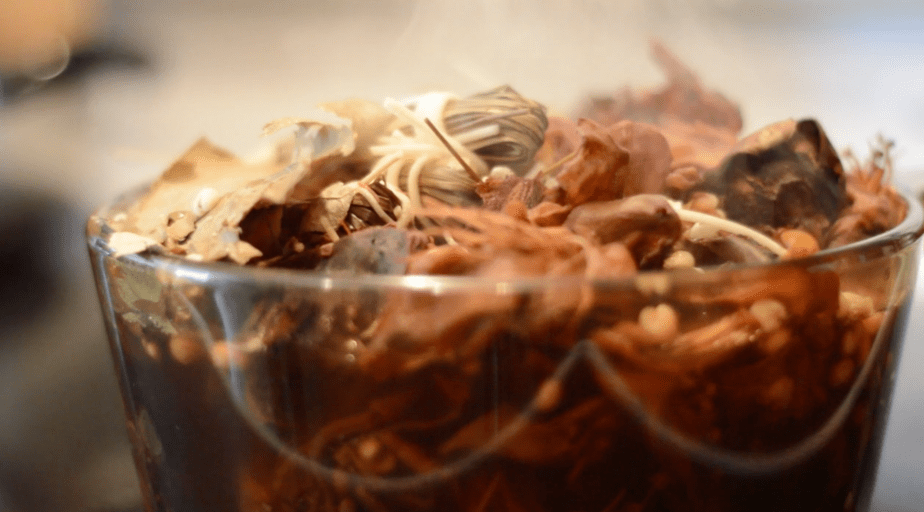
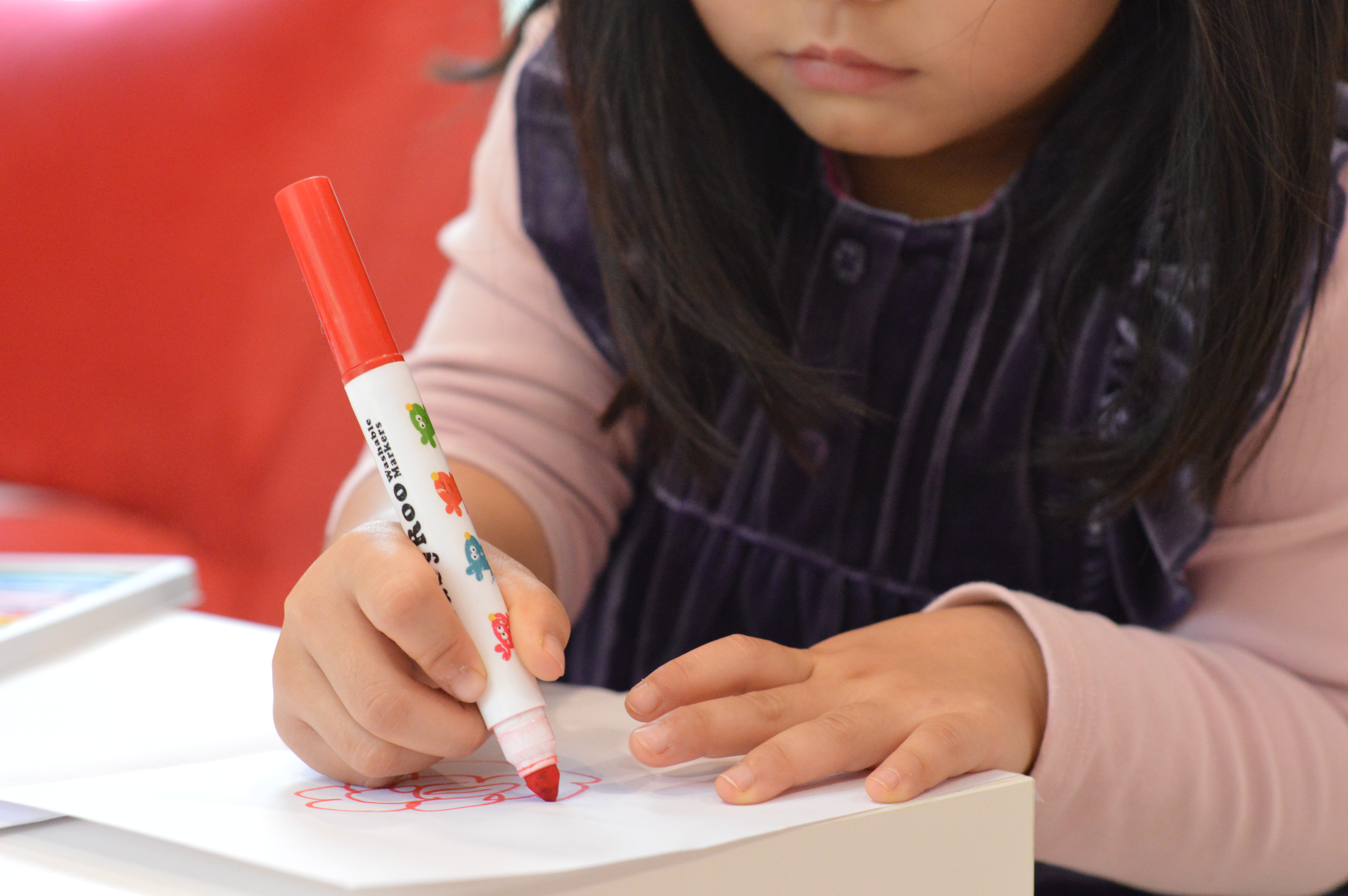
Imagine this. A small child with a head of thick, raven hair gets an annoying cough and a drippy nose. At five or six years old, they are a little over a metre in height—barely tall enough to see over an imposing object in the kitchen. If the child stands on the tips of their toes they might be able to make out the image of someone very dear to them labouring over an odorous pot of boiling herbs and water.
Source: Jenn Ko

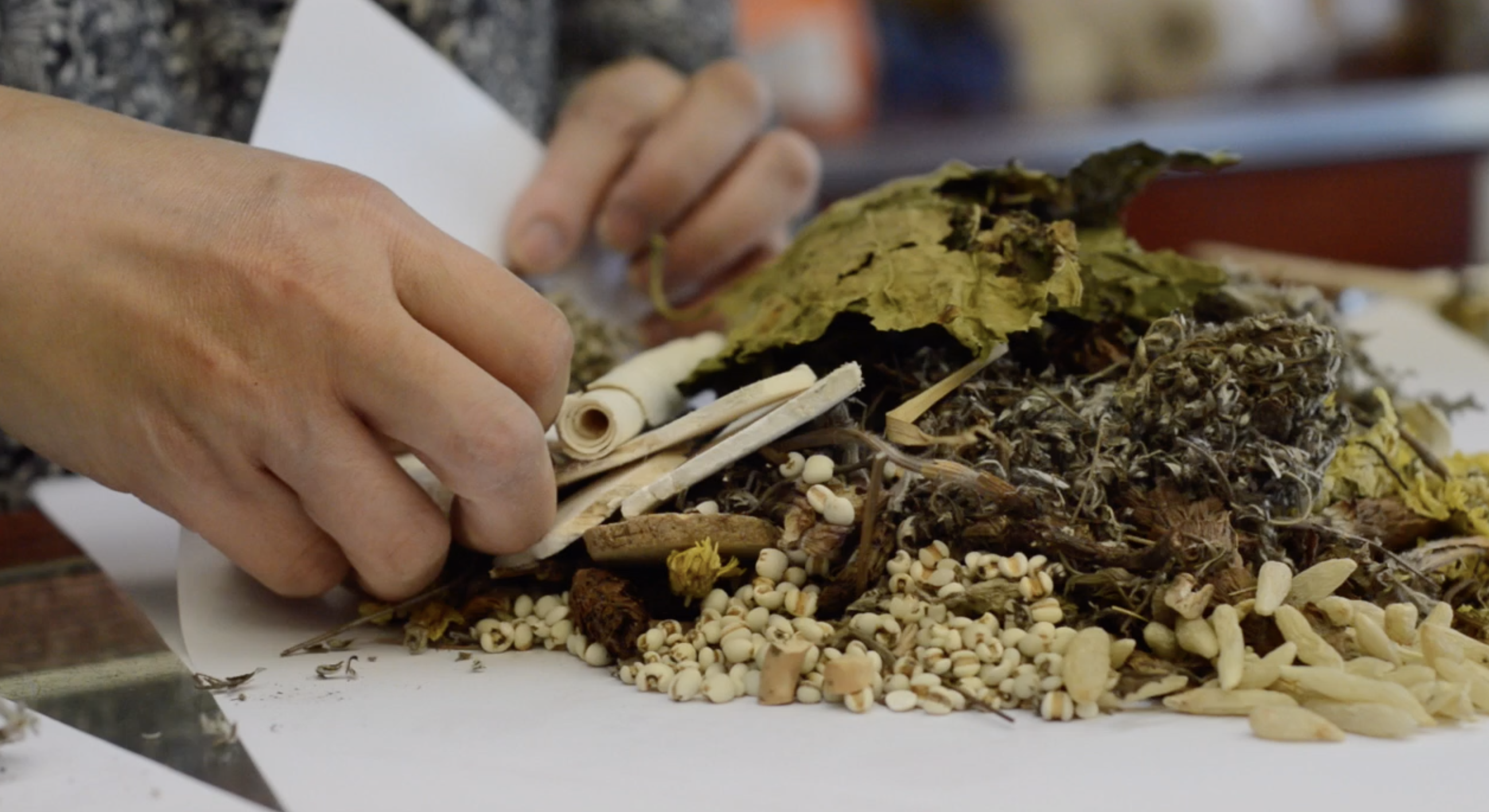
Only a few hours ago, they were in a similarly pungent space with jars packed full of dried herbs, fruits, seafood, insects and more. Imagine this small child was sat down in a chair, or if they are particularly small, in their dear someone’s lap, and made to face a doctor. The doctor took their pulse. The doctor looked at their tongue. Then, the doctor weighed out what looked like a cacophony of dried things and gave it to the child’s dear someone. They instruct the child to take it to return to harmony.

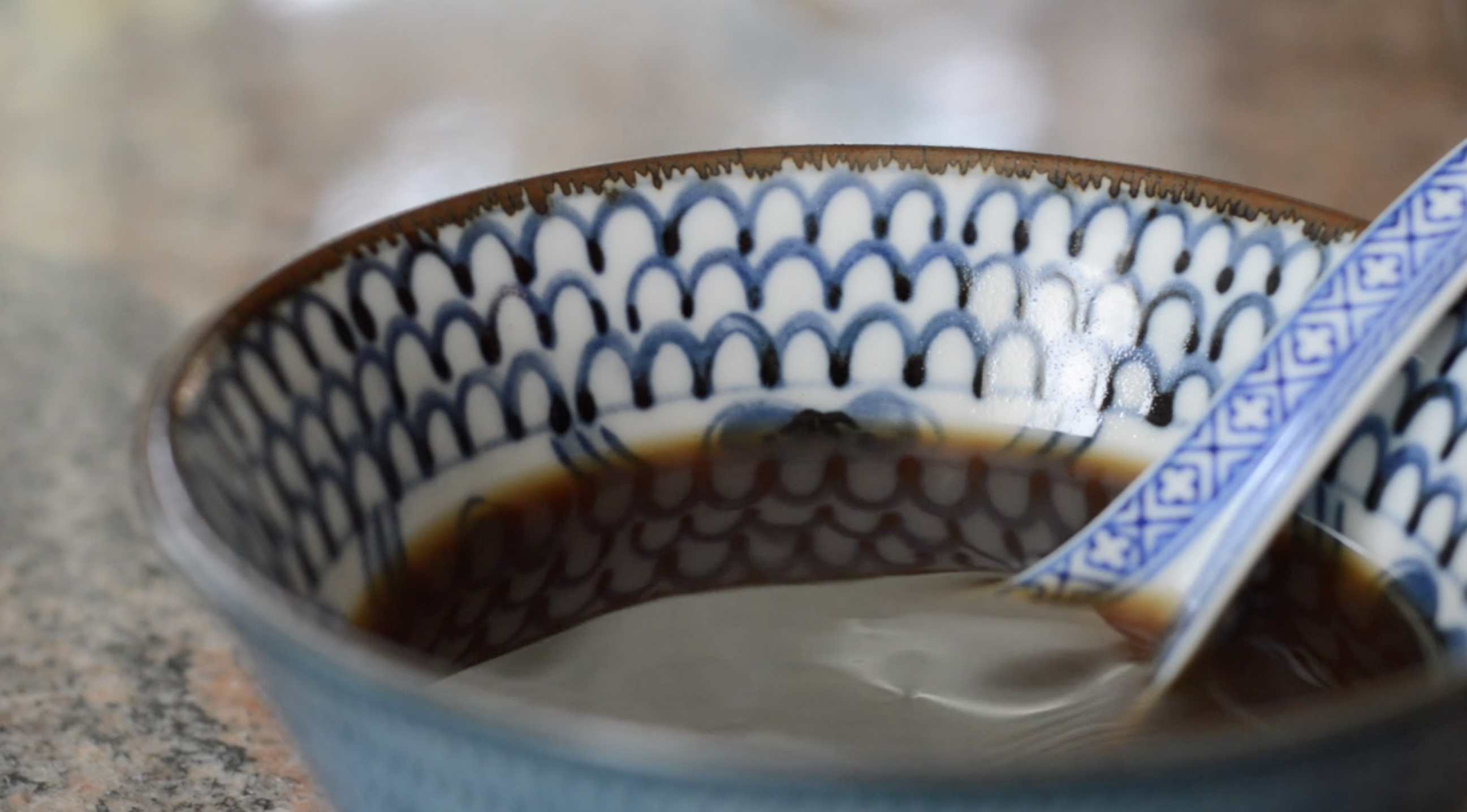
Now, imagine the kitchen again. The child’s dear someone pours the dark liquid into a bowl. The child takes a sip. It is bitter, but their dear someone might have placed some sweet, round, pinkish thin crisps on the table to eat with the bitter liquid. Haw Flakes 山楂餅 (sahn jah bang). The child is told to drink it all, and so they do. Every participant in my study shared a version of this narrative about being a child and being sick.

It is a memory so ubiquitous, so obvious, as common as the common flu.
Source: Jenn Ko

From fall 2016 to fall 2018, I studied the construction of cultural identity through the microcosmic perspective of traditional Chinese medicine (TCM) as culture for Chinese Canadians between two localities, Hong Kong and the Greater Toronto Area (GTA) for my Master’s research. I was interested in subjective questions of culture and identity. The main questions guiding my research were: what role(s) does traditional Chinese medicine play in cultural identity formation in trans-Pacific Chinese communities in Hong Kong and Toronto? How is the notion of Chineseness perceived, experienced, negotiated, and narrated by TCM practitioners and users? How do their perceptions, experiences, negotiations and narrations of TCM relate to family, caregiving, and community?  I conducted 11 in-depth, face-to-face, oral history interviews conducted in Hong Kong and the Greater Toronto Area (GTA), 8 of which I analyzed in my actual thesis. I argue that Chineseness is found in the liminal spaces of their narrative identifications of self, their performances and transmission of knowledge in family, and their negotiation of Otherness in the TCM community in the GTA.

Traditional Chinese medicine is a liminal space where Chinese diasporic communities practice and express hybrid narrative cultural identities. The history of TCM is religious, socioeconomic, political, and deeply personal. TCM is an ancient form of healing built on a foundation of over thousands of years of practice. Sources range in the age of TCM knowledge and practice — it is likely 2,500 years old, but some say it could be 4,500 years old.  It is comprised of herbal medicine, acupuncture, massage, cupping, moxibustion, exercise (eg. tai chi), and dietary therapy. At its most fundamental, the concept of TCM aims to balance two opposing principles in nature—feminine and negative 陰 (yin) and masculine and positive 陽 (yang)—to maintain the flow of vital life energy or 氣 (qi). TCM is not a monolithic canon of medicine as much as it is a “multi-sited, multidirectional, and sociohistorically contingent” set of practices and processes.

TCM is a system of knowledge of healing “made through—rather than prior to—various translocal encounters and from discrepant locations” (Zhan, 2009).

TCM arrived first in Canada with the immigration of Chinese workers in the mid-nineteenth century. In The Concubines Children, Denise Chong’s award-winning memoir about her grandmother May-ying’s struggle as an early immigrant in a Vancouver Chinatown, TCM was a consistent thread of daily life: “A line of pickle jars was her medicine cabinet […] For everyday use, to promote circulation, energy and vitality, were […] yuk choy, dong guai, ginseng and various grasses and tree barks” (Chong, 1996). In 1921, of the thirteen families among 2,035 documented Chinese in Toronto, three were herbalists (Chan, 2011). These early Chinese immigrants brought TCM with them in their suitcases, minds, and bodies in the form of texts, dried goods, seeds and more importantly—their rituals, practices, and memories. In Canada, herbal medicine and acupuncture are the most commonly practiced components of TCM.

Source: Jenn Ko

Today, TCM is no longer restricted to immigrants and a few rare believers—70% of the Canadian population has tried TCM at least once. In the GTA, dozens of TCM colleges and clinics serve Chinese and non-Chinese populations. The usage of TCM is also modernizing; consumers take capsules, tablets, and tinctures in lieu of the traditional process of brewing and drinking herbal tea.

Throughout its history, TCM has been used across socioeconomic identifications and demarcations. The rural poor of 1960s Hong Kong practiced TCM in daily life as affordable and accessible healthcare. The educated and more prosperous Chinese immigrants in present day GTA practice TCM as a part of their culture as they can optimize their health with the combined usage of Western medicine. The participants in my study use TCM as ritual health care in daily life and as medicine to address acute illness. In the GTA, immigrants connect to Chineseness through daily life performances of TCM for self and for family. 
Source: Jenn Ko

The history of TCM in the GTA is intensely political. The evolution of TCM from those early ancient practices and texts has been affected by the geopolitical events in China in the early 20th century, from the conception of Chinese Western integrated medicine in the 1950s, to the abolition and persecution of TCM in the Cultural Revolution, to the modern system of combined traditional Chinese and Western medicine. It has been influenced by the politics surrounding the handover of Hong Kong in 1997, which would bring a ‘classic’ iteration of TCM to the GTA. It was influenced by Ontario regulation and the uneven negotiations of Chineseness within Chinese individuals and communities in the GTA. TCM has a translocal history influenced by capitalism, communism, movement and diaspora. 

Traditional Chinese medicine is fiercely personal. It is a set of embodied practices rich with the subjective narratives of family and community, of personhood and identity.

TCM is embodied memory, affective practice, and transmitted knowledge—a basic part of Chinese diasporic life.

The heuristic examination of narratives of TCM practice in Chinese individuals in Hong Kong and the GTA opens a discursive space to explore diaspora, affect, and performance in their lived experiences. Hong Kong Chinese Canadian individuals living between Asia and Canada use their memories of TCM to perform, negotiate and transmit cultural capital. Chineseness is narrated in individuals, performed in familial roles, and negotiated in TCM communities. 

People and practice are rooted in specific historical narratives influenced by real political, social, and economic events. They adapt as they traverse spatiotemporal routes. Both have the potential for healing and harm, flow multi-directionally, and are inscribed by generational memory. Like the Hong Kong Chinese diaspora in Toronto and Chinese Canadian diaspora in Hong Kong, traditional Chinese medicine also straddles constructed narratives of East and West. Placing these two elements—Chinese diaspora and traditional Chinese medicine—on either side of an imagined, conceptual mirror may coax out the interesting and meaningful differences and similarities in the myriad of reflections which comprise cultural identity.


This post is Part One of a five-part series, where I use a blog format to present and elaborate themes less-explored in my M.A. in History thesis. 

References
Chan, Arlene. The Chinese in Toronto from 1878: From outside to inside the circle. Toronto, Dundurn: 2011.
Chong, Denise. The Concubine’s Children: Portrait of a Family Divided. New York: Penguin Books, 1996.
Zhan, Mei. Other-worldly: Making Chinese medicine through transnational frames. Durham, Duke University Press, 2009.

Catherine Chambers’ entrepreneurial spirit

This is a short audio story about the entrepreneurial spirit of Catherine Chambers, soap maker/social worker extraordinaire, that I put together for a job application. She’s the owner of Let’s Make It, a company that offers collaborative experiences and teaches DIY skills.  On top of being a business owner, Catherine is also a mother and a graduate student at OISE.

Thank you to Catherine for speaking to me on such short notice (1 day!). Thank you to my good friend Alicia, also a future teacher, for introducing me to Catherine.

Thesis writing with Wonder and Sadness

I wonder why my partner and roommate of one year wrote a love letter to an ex of two years prior, and let me read it. This word .docx populated with rosy memories, gentle language and subversive desire for response was my eviction notice. His words for her pushed me from our shared apartment, my relationship with a beloved cat, and eventually, from the muffled sadness that was our life. Muffled and ‘ours’ no more.

I wonder why I resisted the sinking feeling for two months. Perhaps it was a fear of being regarded in emotional inferiority that led me to mask the misery of love lost in jolliness to my friends, my family, my self. Public, digital personas of the online universe— the near and dear and the faraway and famous— shouted happiness at me. A synesthesia of sorts translated their bright, carefree smiles into a heard command: Do Not Sulk! It took two moons and two bottles of wine with a waxing crescent until I told them to fuck off.

I wonder for how long my sense of freedom and relief will be speckled with longing for the past.  These days I desire to be only mine, but if I were honest with myself, I also desire to be desired. Moments flush with opportunity seem to be bookended by me staring at a notification-free phone. I should keep busy. I should read more. I should work more. Maximizing productivity is considered medicinal in this state of the heart, but my research into traditional Chinese medicine teaches instead of the healing effects of optimizing balance. The irony.

It is a wonder how the unspooling of these words have calmed me. Many have said wise words on the act of writing. The English playwright David Hare said, ‘The act of writing is the act of discovering what you believe.’ I believe I am fortunate that the end of my relationship coincided with the end of the data collection stage of my research. It is a life-event of boundless bounding, an in-between rich with creative force. This is the sense of wonder and these are the affects I am approaching with as I embark on writing the first draft of my M.A. thesis.

“You can approach the act of writing with nervousness, excitement, hopefulness, or even despair–the sense that you can never completely put on the page what’s in your mind and heart. You can come to the act with your fists clenched and your eyes narrowed, ready to kick ass and take down names. You can come to it because you want a girl to marry you or because you want to change the world. Come to it any way but lightly. Let me say it again: you must not come lightly to the blank page.”
—Stephen King

The search for truths continues. Thank you for indulging me!

The Social Life of Animal Bodies and the Natural History Museum

“Slaves, once sold as chattel, can become gradually humanized, personified, and reenchanted by the investiture of humanity.” – Arjun Appadurai

Appadurai first introduced the idea that the distinctions between persons and things oscillate and undulate throughout various temporal spaces in 1986 in a collection of essays titled The Social Life of Things. This idea, mentioned in passing in my previous blog post, dissolves the perceived binaries between commodity and singularity; person or thing.

Take for instance, the ethnographic museum’s relationship with indigenous peoples. Over time, the social trajectory of these peoples has shifted from being ethnographic material to source communities, as we call them today.

However, this discourse is not on the question of whether indigenous persons and human remains should be objects of entertainment or education in a museum. That question has already been answered with a clear and resounding “NO.” This discourse is on whether animals should be objects of entertainment or education in a natural history museum. This question tries to look for a similar negative affirmation that society can work towards for a distant temporal future.

As a caveat: this argument is in no way attempting to reduce indigenous peoples to the cheap commodity level society currently attributes to animals. Rather, my argument attempts to raise animals to the level of singularity enjoyed by humans. Obviously and most importantly, colonial institutions needs to first engage every available mind and dollar to foster reconciliation with Inuit, First Nations, and Metis peoples living on the land our settler society today calls Canada.

Observing the Museum of Nature in Ottawa as a critical museum visitor, as described and theorized by Lindauer, I found myself repeatedly examining the relationship between human curator, human visitor, and animal body and comparing it to the relationships of recent past between white curator, white visitor, and minority body or image.

The taxidermied and live animal displays, or as the museum calls them, live specimens are presented and received as indisputable fact. There were no obvious counterpoint discussions that explained the supposed ‘welfare’ or ‘ideal treatment’ of the encased animals.

A director of content for the museum discussed the evolving relationship between human and nature as one of the key focal points to integrate into the visitor experience, in accordance to evolving museum theory and societal norms. Humans as nature, she said. Nature as value — and not the sense of economic value, but that nature in itself has value. From my perspective this statement was a stark contradiction of the blissfully ignorant museum displays.

Lindauer, Margaret. “The critical museum visitor.” New museum theory and practice: An introduction (2006): 201-225.

“Artists, like curators, work on their own, grappling with their attempt to make a world in which to survive…. We are lonely people, faced with superficial politicians, with donors, sponsors…. I think it is here where the artist finds a way to form his own world and live his obsessions. For me, this is the real society.”

Harald Szeemann, 2000

UPDATED: Out of the Box and Into the Farmhouse

This summer, I was lucky to be working with the Canadian Tulip Festival as a curatorial assistant to create a small exhibition for the World Tulip Summit in October 2017 and the next Canadian Tulip Festival in May 2018. It was my job to research the history, search for artifacts, and write the exhibit text. The contract was only nine weeks long. If I’m being honest, I felt a little like a fish out of water. Off the stove and into the oven? I’m not great with idioms.

Most of the time, my student job looked like this:


There were few historical materials available to me at the beginning of my contract, as The Festival had recently moved into a small office space at in the Horticulture Building at Lansdowne. I spent the first week reading through a previous archive student’s notes and emailing local museums in hopes they may have some tulip-related artifacts in their collection. There was a noticeable void of material. In desperation, I decided to think out of the box and put out a call on Reddit Ottawa…

“To all tulip festival goers past and present: Do you have any old knick knacks, posters, pictures, or artifacts from past Tulip Festivals that I can use for a project? I’d give you full credit for your items. Putting together an exhibit of sorts.”

Redditor and local historian Dave Allston replied with a clue that would lead me on a journey to the Reid Farmhouse on Sherbrooke and Reid, just off of Carling Avenue, and to some difficult curatorial decisions. The Farmhouse is a dusty, forgotten-in-time structure slated for demolition built in 1865, and at one point, it was the only three-story home in Kitchissippi. This makes the farmhouse one of the oldest buildings in the Ottawa region. Astonishingly, it also happens to be the storage space of a decade’s worth of Canadian Tulip Festival materials!


Unfortunately, because the building has been modified at various times, the structure could not attain a heritage building designation. The Reid farmhouse will maintain a small portion of its first floor and be revamped to better fit the needs of the Kitchisippi community. Moreover, because the Canadian Tulip Festival experiences a high staff turnover, the artifacts in storage were almost entirely forgotten about.

On two separate occasions, I swallowed my vehicular fears and got behind the wheel of a coworker’s old pick up truck that has neither air condition nor interior car lights. Together, we sifted through dusty photo albums, financial reports, posters, objects and rat-droppings; selected the most important materials; and hauled boxes and boxes of them to back to headquarters. Today, our little Horticulture Building office is pressed for elbow room.

I was also faced with (what I think is) the classic curatorial dilemma. My original problem of not having enough materials was now the inverse — I had an enormous excess. How to go through it all?

After consultation we decided to write a story about the tulip as a symbol of international friendship, using images and objects that were shared between Canada and our friendship countries around the world. My favourite object is a wooden Japanese flower vase, a gift from the Japanese delegation in 1997. The vase will be shown with a fresh ikebana flower arrangement, created in collaboration with the Ottawa Ikebana Chapter.


UPDATE:

Here’s a sneak peak of a couple of interesting finds. See the finished exhibit at the World Tulip Summit at the Westin Hotel in Ottawa October 4-7, 2017.

I can hardly thank the Canadian Tulip Festival enough for giving me the space to learn independently and trusting me to take on this project. After these short nine weeks, I have a renewed appreciation for the tulip, and the kind people who take their time to ask people to stop and smell the flowers.

LONGING IN EXILE: Cinematic Representation of Handover Anxieties in Peter Chan’s Going Home

This is an excerpt of my final essay for the Directed Readings Course, Migration, Ethnicity, Diaspora I took in Winter 2017 with my thesis supervisor, Dr. Daniel McNeil. MAJOR SPOILERS ahead. 

In his seminal essay, ‘Reflections on Exile,’ Edward Said denounced modern culture’s attempts to manifest honest representations of exile, calling its objectifications banal and its beneficial claims mute. An exile of Palestine and Egypt himself, Said described the unenviable condition as “the unhealable rift forced between a human being and a native place, between the self and its true home: its essential sadness can never be surmounted.” Literary productions originating in such unglamorous suffering can hardly be understood by those who read them enveloped by a sense of belonging. He asks: is it not true that these representations obscure the horrendous? Do such cultural productions not hide exile’s affective likeliness to death, but without death’s lenient finality?  The nations of Said’s eclectic upbringing are similar to the Hong Kong of the following discourse: none exist as they did due to the recidivism of British colonialism and the politics of nation-building. Handover-era Hong Kong’s unique position of in-betweeness situated a cultural space that tried to answer questions on exile, being, and belonging.

The front page of The New York Times on July 1, 1997.Credit

Here I argue that pre- and post-1997 Hong Kong handover cinema can stand in refutation of Edward Said’s assertion of the humanistic and aesthetic incomprehensibility of modern culture’s representations of twentieth-century exile. The dark, comedic ‘banality’ in Stephen Chow’s desires and necessities, and the excruciating ‘muteness’ in Wong Kar Wai’s strained romantic encounters are a couple obvious examples of well known Hong Kong directors and their ability to put exile to screen. However, much has been written about the international successes of Steven Chow’s use of glocalization in transnational, transcultural filmmaking success and Wong Kar Wai’s masterful command of time and emotion to convey exile and emptiness. I do not wish to add to that canon of literature. Instead, following Žižek’s Lacanian analysis, I want to interpret the less-restrained particularities and revelations found in the Hong Kong B-horror fantasy space of Going Home (2002). Unlike the “auteur of time’s” manner of speaking in ellipsis that entrances international critics and academics, Peter Chan produces diasporic feelings of exile, loss, and transience in Going Home through fear in the juxtaposition of absurdity and familiarity. The film was the third part of Three (2002), a collaborative horror anthology from Thailand, Hong Kong, and Korea.

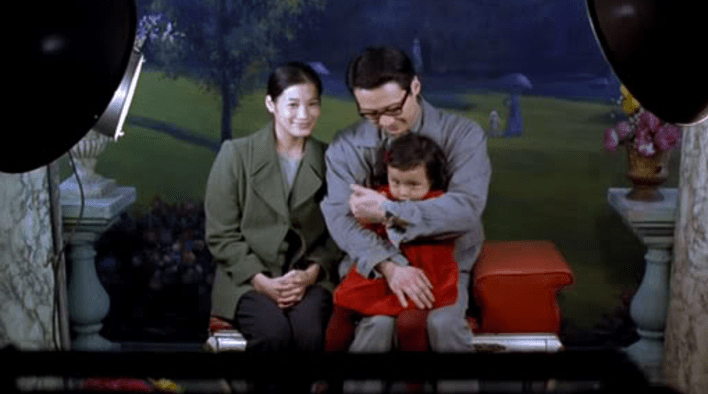
Still From Going Home (2002).

The film is opened in a sea of subjectivity—a young girl in a bright red coat stands amidst dozens of foggy, sepia-toned portraits in a dingy, phthalo green photo studio.  A cop, Chan Kwok-wai (Eric Tsang) and his son, Cheung move into a battered, near-vacant apartment complex slated for demolition. Chan learns that only other residents are Yu (Leon Lai), his paralyzed wife, Hai’er (Eugenia Yuan)—both introverted doctors trained in traditional Chinese medicine (TCM) from the mainland—and their young daughter. Cheung catches the girl in the red coat leering at him through windows and behind doors, is unsure why he is afraid of her, but the two become friends and he follows her to the photo studio to play. Upon returning home, Chan cannot find Cheung and accuses the only other resident, Yu, of kidnapping his son. Chan breaks into Yu’s apartment, but stunned to find Hai’er unmoving, breathless and submerged in a bathtub of herbal medicine, he is caught and rendered unconscious. Yu takes the cop hostage because Chan has learned his secrets: his wife Hai’er is dead; he is attempting to bring her back to life with Chinese medicine; and he talks to her every day. Strange, but kind, Yu tells Chan the couple never had a daughter, but aborted their child when Hai’er was diagnosed with a fatal cancer. He plans to release Chan when his wife revives in three days, when they will depart home to Changsha home in the mainland.

In those three days, Chan learns that Yu’s necrophilia and mystical dedication to reincarnation does not make him evil. The two experience intimate moments of friendship while Chan is bound and restrained, and Yu even attempts to find Cheung. On the third day, exactly three years from the day Yu strangled his wife to death to begin the healing process to cure her cancer, and the day of Hai’er’s supposed reincarnation, Chan’s police colleagues arrest Yu and collect his wife’s body. Just as Hai’er’s fingers begin to twitch, Yu escapes from the police and is hit by a passing car and killed. After, Chan watches a video recording of Hai’er speaking to her husband as she uses the same traditional healing process to revive Yu’s dead body. Going Home ends with Cheung leaving the photo studio and Yu, Hai’er, and the girl in the red coat posing to get their photo taken.

Still from the denoument of Going Home (2002).

In Going Home, Chineseness is embodied in Yu, Hai’er, and their dedication to traditional Chinese healing practices. Directer Peter Chan envelops the couple in otherness by contrasting myth/science, traditional/modern, Chinese medicine/Western medicine. Yu’s repetition of the same memory—the moment he met his wife—both speaks her personality into her expressionless corpse and reinforces their shared Chinese identity. In Mandarin Yu lovingly says to his wife’s body, “Do you remember when I first took your pulse?” When the cop yells back from the corner of the room, tied up, that his wife is dead, Yu switches to Chan’s Cantonese dialect with ease: “Yes, Western medicine says she is deceased, but her tumours will be dispelled if I immerse her in Chinese herbs every day. She’ll revive and all will be well.” Their exchange creates the divide between insane Chinese captor and sane Hong Kong captive, but also accentuates the cultural connections through the men’s linguistic fluency. Yu masterfully flits between the dialects and while Chan does not choose to speak Mandarin, he understands it. The language of both are Chinese, but the manner of speaking them are named Mandarin and Cantonese. The ‘I’ speaks language and it is imperative to representation of the self through expression. But language also speaks the ‘I’, in that words shape subjective identities through their inherent histories. Therefore Chan can be read as a defiant Hong Konger, hearing his captor’s tongue but speaking his own Cantonese. Yu can be read as fluid—adapting to the dialect of this different, but similar land.

In his aptly named personal essay, “On Not Going Home,” literary critic James Woods writes that his “softer emigration” is not quite the same as Said’s “desert of exile.” Is the ‘unhealable rift’ finally patched in death? Or does death connote a more permanent desolation? If Said considered exile to be death’s less merciful cousin, were Yu and his family graced by a kinder fate? Although Chan lives, he remains in the desolate complex. His son is nowhere to be found and he remains captive in Yu’s story. Chan seems unable to cross the threshold into a temporality and spatiality can begin its march anew. Earlier in the film, Cheung is afraid of the empty rooms and screams into each one, but only forgotten photographs hear him. He is screaming at walls that do not move, and he is likewise unable to move. Father and son continue to struggle. Perhaps both men are migrants: Yu is not going home and Chan is in exile. In the character’s exploration of being and belonging, it would seem that the former feels the softness of knowing his home, and the latter is left with the discomfort of an untethered identity. 

  • “Going Home.” As part three in Three. Directed by Peter Chan. Hong Kong: Applause Pictures, 2002.
  • Said, Edward. “Reflections on Exile” in Reflections on Exile: And Other Literary And Cultural Essays, 173-186. Granta Books: London, 2000.
  • Woods, James. “On Not Going Home,” London Review of Books, 20 February 2014.
  • Žižek, Slavoj. Looking Awry: An Introduction To Lacan Through Popular Culture. MIT Press: Cambridge, 1992.
  • “Front Page,” July 1, 1997. The New York Times. https://sinosphere.blogs.nytimes.com/2015/07/01/in-hong-kong-handover-day-is-a-day-of-protest/

© Jenn Ko and jennleahko.wordpress.com, 2017. Unauthorized use and/or duplication of this material without express and written permission from this site’s author and/or owner is strictly prohibited. Excerpts and links may be used, provided that full and clear credit is given to Jenn Ko and jennleahko.wordpress.com with appropriate and specific direction to the original content.

Thoughts after my First Year of Grad School

8 months, 4 courses, 2 credits, and countless readings later, I have made it to the halfway point of my graduate degree. The year can be considered in other quantitative ways: I taught about a hundred students; was inspired by dozens of exciting ideas; made diverse friends; and shared many, many drinks with them. What follows are general takeaways on my year.

From Journalism to History

The thought of a 30-page final research paper was paralyzing coming from a discipline where our suggested readings consisted of 700-word news articles and the longest written assignments were 1,200-word in-depth reports. The scope of research and writing required was an important incentive to pursue a graduate degree, but it was also the source of some serious imposter syndrome. Looking back at this fear, I can say that I was irrational to think it would be difficult to produce 5,000 to 7,000 word papers when exploring intricate, nuanced, and colourful theories and histories.

It turns out that concise and compelling writing is a highly valuable and diverse skill even historians need. At the beginning of the year, I was worried that my lack of historical knowledge would put me at a disadvantage compared to my peers. Now I think my journalism experience gave me an advantage in synthesizing, writing, and performing information.

NOTE TO A PAST SELF: Girl, relax. What you learned in J-school will only help, not hinder, you.

Being a Teaching Assistant

Learning is a team effort. It works best when everyone is involved in a collaborative and creative project. This is an obvious statement. All professors, TAs, and students technically know this, but collaborative teaching or learning is not obviously or easily practiced.

Kelsea, another TA, and I were assigned to both the Fall and Winter sections of Historians Craft, a second year methodologies course. In it’s fall iteration, there was some effort to work and communicate between professor/TA/student, but it paled in comparison to the winter iteration. The professor ensured that we would always have ample in-depth meetings to discuss assignment ideas, structures and rubrics and logistics of class activities, group work and presentations. To be fair, Kelsea and I were only able to have informed collaboration from our first experience as TAs.

In this learning space we were able to create a few creative products to enhance learning. We organized two classes of student oral presentations, fitting 50 student and various opportunities for feedback smoothly into less than 3 hours of class time. We also produced a public deliverable showcasing student work: a virtual exhibit on Great War objects and monuments.

NOTE TO A FUTURE SELF: Students are a full of useful surprises. They are a wealth of information, ideas, interests, and of course, excuses for late assignments.