Flow in the Classroom

Flow is that magical moment when you’re completely immersed in an activity. Where you’re so engaged that all worries, sense of time, and sense of self just fade away. It’s a state of hyper focus.  It’s being “in the zone.”  Flow was first coined by psychologist Mihaly Csikszentmilhalyi, and a highly desired outcome by teachers around the world. It’s an educational concept with goals to deepen learning and promote long term interest in students. 

IMG_1459For example, I experience flow when I play ukulele. I picked it up as a hobby during quarantine. When I play ukulele, I’ll play until my fingers roughen up and bleed. I’ll sit, open up some tabs or watch a youtube tutorial, and lose 6 hours of my day. This in no way means that I’m good at it. When I zone out and regain my self-consciousness I feel bad for people that live within earshot of me. But it does mean that I love it. And my love for it means that I’m improving fast. 

I also feel it when I produce stories. It’s something I picked up in journalism school years ago, and has stuck with me to this day. It’s the reason why I’m making this video here. When I’m working on a documentary, vlog, podcast, or other multimedia project… I get into that state of hyper focus. It’s fun for me. I’m creating something that I can show to the rest of the world.  It’s a feeling that I personally never got during math class or filling out grammar workbooks when I was a kid. It’s a feeling I absolutely do not get when I’m working on my taxes or other boring governmental applications. 

My cellphone is a litmus test for whether or not a task is engaging enough. These days, I normally feel anxious if it’s not next to me. If I’m working on something that I don’t like, I’ll check it every 3-15 minutes. I could be checking for an email or a text message and end up scrolling on social media for an hour. If I’m in flow, however, I forget that thing even exists.

But how do we foster “flow” in the classroom?

The difference is between making space for true engagement vs. requiring on task behaviour. David J. Shernoff, an associate professor of educational psychology at Northern Illinois U has said that flow is the result of Environmental challenge + environmental support. Students need to be challenged with an important task with clear goals in an environment built through positive relationships, motivational support and constructive feedback.

Flow can be fostered in developing partnerships with the community, creating learning opportunities not confined to school grounds. Educators need to find tasks students want to do. emphasize student choice, and minimize distraction. 

Here’s an example. Let’s pretend we’re in a first grade language arts class. I might give the kiddos a newscast project. I’ll ask them to work in teams and tell stories of their choice. I’ll give them the freedom to vote on the news sections as a class. Say they decide to tell news stories about the school, about climate change, about coronavirus, about toys, and their families. I’d outline different roles and students would be able to choose what they wanted to do themselves. Students would practice our multimedia and technology skills and hone their storytelling skills. Hopefully they think it’s fun too! 

And I’ll make a video of the kids making a video. The Key Learning Community High School in Indianapolis (After opening in 1987, the school closed in 2018) produced a documentary for each student from the beginning to the end of the school year. They hired a videographer to document key moments and package into something the children can build and reflect on. It helps them Set goals and reflect on their progress. 

I will definitely try a version of  this for my class in September. Since I’m just 1 homeroom teacher and likely won’t have the time to produce an individual movie for each student, I’d produce one for the whole class. I like making videos, so this would fit nicely into my own flow.

Flow, play and learning go hand in hand.Incorporating flow and play in learning means creating an environment for students to explore freely. During play, students can make mistakes, discover strengths and boundaries, develop creativity and imagination, and make connections with peers.  What could be better than learning while you’re having fun? 
Mobile and Project-Based Learning [Podcast]

This is a podcast about a game-centered, and creative project based assignment that integrates mobile learning. How can students use mobile technologies in the classroom to enhance project-based learning? Have a listen!

Special thanks to Sian Eatwell, Bensound.com, and Brianna Hugh.

jennleahko · Climate Change Scavenger Hunt: A Project-Based Mobile Tech Lesson

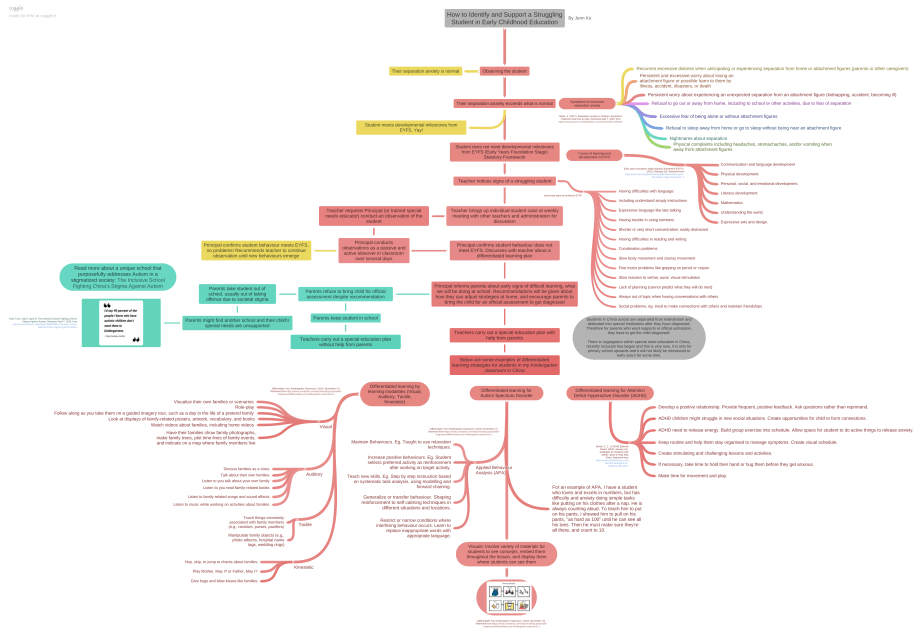
Mind Map: How to Identify and Support a Struggling Student

I created a mind map documenting the steps taken at my kindergarten in China to identify and support children who might be struggling. At the end of the mind map I focus on different modes of learning, Autism Spectrum Disorder, and Attention Deficit Hyperactivity Disorder because those are the cases I have experienced firsthand in my classroom. This method uses the Early Years Foundation Stage (EYFS) framework as a guiding standard and philosophy.

How_to_Identify_and_Support_a_Struggling_Student_in_Early_Childhood_Education_

Using Technology in Student-Centered Lesson Plans [Video]

COVID-19 has pushed the field of education online much sooner than many educators anticipated. Teachers everywhere are adjusting old and trying to adopt new learning strategies to better serve their students in a digital world.

This vlog was created using the answers from a questionnaire I conducted with teachers around the world. discussing technology in the classroom. I talk about integrated lesson plans, strategies, ethics, and digital learning during COVID19.

A checklist for creating technology-enhanced learning plans:

  • Does the teconology benefit students of all learning levels, styles and backgrounds in the class?
  • Are all students able to access resources besides at school? If not, what adjustments can be made to accomodate those students?
  • What is the real-world application of the technological skills the students are using/acquiring in this exercise?
  • Is the technology conscientious about protecting student data and privacy? If students need to give some personal information, is the level of exposure acceptable compared to the benefits of usage?
  • What is an alternate activity or backup plan in case the technology is not working or not responsive?

Case Study: Rey and Autism Spectrum Disorder

Names have been changed to protect the student’s identity.

Rey is a sweet and incredibly smart three-year old boy in my K1 classroom in China. When he started with us in Pre-K, he showed signs of extreme separation anxiety. His mother or maternal grandmother would walk him to the front door of our classroom and like many students his age, he would hold on as if for dear life. However, even after 15 minutes of pleading from his caretakers and teachers, Rey could not be convinced to come play with his peers in class. Even an hour after his guardian left the kindergarten, Rey would oscillate between crying out in deep despair or sulking quietly with his head down. This behaviour lasted several months through to K1.

He is presenting with other concerning habits and characteristics. Rey has not made any close friends. Peers who started school around the same time as Rey have developed treasured friendships, but Rey is content to spend the entire day of everyday alone. Other children might feel sad if they were excluded from others, but Rey would barely notice he was standing alone. He rarely made eye contact with others. When adults spoke to him, they would often need to guide his face and eyesight towards themselves by gently holding his face. Rey also has more difficulty performing simple tasks such as: folding his jacket; taking off and putting on his clothes after nap time; eating; and brushing his teeth. Rey can become very upset if he cannot put on his sweater or pull up his pants and might panic or begin to cry. However, if I tell him to pull on his sweater and push his head through the “big zero” with his arms “as strong as 100.” Rey will calm down and complete the task. Similarly, if I tell him to “pull on your pants as hard as 100 until you can see and count all 10 toes”, he can put on his pants without frustration. Rey has difficulty following multi-step processes during arts and crafts time. Rey rarely communicates his thoughts, feelings and desires to teachers or students. However, he speaks in a near-constant stream of numbers throughout the day. If he uses his voice to speak, it is to count aloud from 0 to 1000. If teachers ask him a question ranging from, “What is this?”, “Where is the pig?”, “Did you wash your hands?” to “Are you happy?”, he will respond in numbers. Rey shows an above-average affinity for memorization, patterns and mathematics. He could do simple addition and subtraction when other students were just learning to count. If letter flashcards are laid on the floor randomly, he can organize the entire alphabet from A to Z.

After observing Rey’s behaviour for several months at school, teachers asked his mother about their home life with the intention to develop and coordinate an intervention plan collaboratively. Rey’s mother then explained to us that she has severe, diagnosed clinical depression and is taking medicine and receiving therapy from a professional. This is exceptional in China because people rarely diagnose mental health issues due to societal stigma. Rey’s mother also disclosed that Rey’s father is not compassionate and has anger issues. He apparently only treats Rey’s infant baby brother with affection. Emotional, she admitted that Rey’s father has said to her, “You are a terrible mother for being incapable of raising a normal son.” and “That is no son of mine.” It should be highlighted that Rey’s mother is a very loving mother and Rey adores her.

Based on the description, what do you think about Rey and his behaviour? What steps should teachers follow to seek help at this time? What is the teachers’ role after hearing about Rey’s complicated home life? How can teachers differentiate learning to create a student-centered solution for Rey?

Rey’s behaviour can be analyzed through different standards in early childhood education and psychology—in this case the EYFS and DSM-5. Clearly teachers already noticed that Rey is not meeting certain Early Years Foundation Stage (EYFS) standards. He shows reduced physical development in both gross and fine motor skills. His lack of eye contact, peer and adult relationships, and expressive language shows less personal social and emotional development. His difficulty with crafts time shows an issue with expressive arts and design. These signs of a struggling student are enough for the teachers to reach out to admin and seek further analysis and possibly diagnosis. The special education professional at our kindergarten also happens to be the principal. She conducted observations as a passive and active observer in the classroom over several days, using The Diagnostic and Statistical Manual of Mental Disorders, Fifth Edition (DSM-5) as reference and made a preliminary conclusion that Rey has Autism Spectrum Disorder. Teachers need to collaborate with parents and administration to deliver the best care and education for Rey. The kindergarten recommended that Rey get a professional diagnosis, but Rey’s parents refused. Without an official diagnosis, students in China are unable to receive special education funding from the government, so we made our own plan.

We used an Applied Behaviour Analysis approach to create a differentiated learning plan for Rey. We are teaching Rey relaxation techniques. Whenever he starts to panic, I will take him aside and practice simple breathing exercises. We are working to increase positive behaviours. Rey selects a preferred activity (usually some form of math with physical objects) as reinforcement after working on a new, target activity such as pre-writing or new vocabulary. Teaching new skills requires step-by-step instruction using modelling and lots of patience. For instance, every day after nap time a teacher will sit with him and repeat the instructions (speaking with numbers as a language) for putting on his clothes. During writing practice time, we will give him similar worksheets. Letters A to E were very messy but letters F to O are almost excellent!

The most difficult aspect here is his family situation. Adverse childhood experiences can cause years of negative outcomes for children. However, working at a private kindergarten in China means that teachers need to follow certain societal standards. Teachers need to create a safe environment for Rey at school while fostering opportunities for him to learn how to make and maintain meaningful, lasting relationships with others without causing undue tension with his parents. We make a concerted effort to pair him with the friendliest, chattiest, and kindest students in the class. We need to prioritize relationships and teach him how to bond with good people, listen to him, and create opportunities to succeed. The skills Rey develops in kindergarten will become the foundation for his future. Teachers who suspect their students are dealing with traumatic homes must be an essential source of stability and support.

References
Autism Speaks. (2019). Applied Behavior Analysis (ABA). Retrieved April 18, 2020, from https://www.autismspeaks.org/applied-behavior-analysis-aba-0
Centers for Disease Control and Prevention. (2019, August 27). Autism Spectrum Disorder Diagnostic Criteria. Retrieved April 18, 2020, from https://www.cdc.gov/ncbddd/autism/hcp-dsm.html
Practice Guidance for the The Early Years Foundation Stage: Setting the Standards for Learning, Development and Care for children from birth to five. (2008, May). Department for Children, Schools and Families. Retrieved from https://www.foundationyears.org.uk/files/2011/10/EYFS_Practice_Guide1.pdf
Early years foundation stage statutory framework (EYFS). (2018, February 20). Retrieved from https://www.gov.uk/government/publications/early-years-foundation-stage-framework–2
Differentiate Your Kindergarten Classroom. (2016, November 17). Retrieved from https://www.scholastic.com/teachers/blog-posts/allie-magnuson/differentiate-your-kindergarten-classroom-1
Lahey, J. (2014, December 02). How Teachers Help Students Who’ve Survived Trauma. Retrieved April 18, 2020, from https://www.theatlantic.com/education/archive/2014/12/how-teachers-help-kids-heal/383325/

Teaching Kindergarten Online from Hostels in South East Asia During COVID-19

This video is about the problems I encountered and solutions I tested as a K1 teacher while travelling abroad during the peak of the Coronavirus in China. How do you teach ESL 3-year olds with nothing but your iPhone from hostels in Southeast Asia? I used WeChat, InShot, and YouTube.

This video is filmed and edited in the same method that I used while teaching on the road — made on and for viewing with the mobile phone.

Shots from Hong Kong

Exactly one year ago today, I returned to Ottawa from a research trip in Hong Kong.

Those two-and-a-half weeks were spent lugging camera equipment around the crowded city to interview participants who had something to say about migration, diaspora, and traditional Chinese medicine. That is casting a wide net, as most Hong Kongers have like had experiences and memories–personal or intergenerational–about all three.

On this one year anniversary, I thought I would share some snapshots I took on the trip.

Ornate window in one of the the centuries old walled villages of Yuen Long District in Hong Kong. Jenn Ko, 2017.
Waiting for the ferry to Lamma Island. Jenn Ko, 2017.
Hardware shops in Hong Kong are nothing like the giant Home Depots here in Canada. They’re cramped, packed full, and bursting with textures and colours. Jenn Ko, 2017.
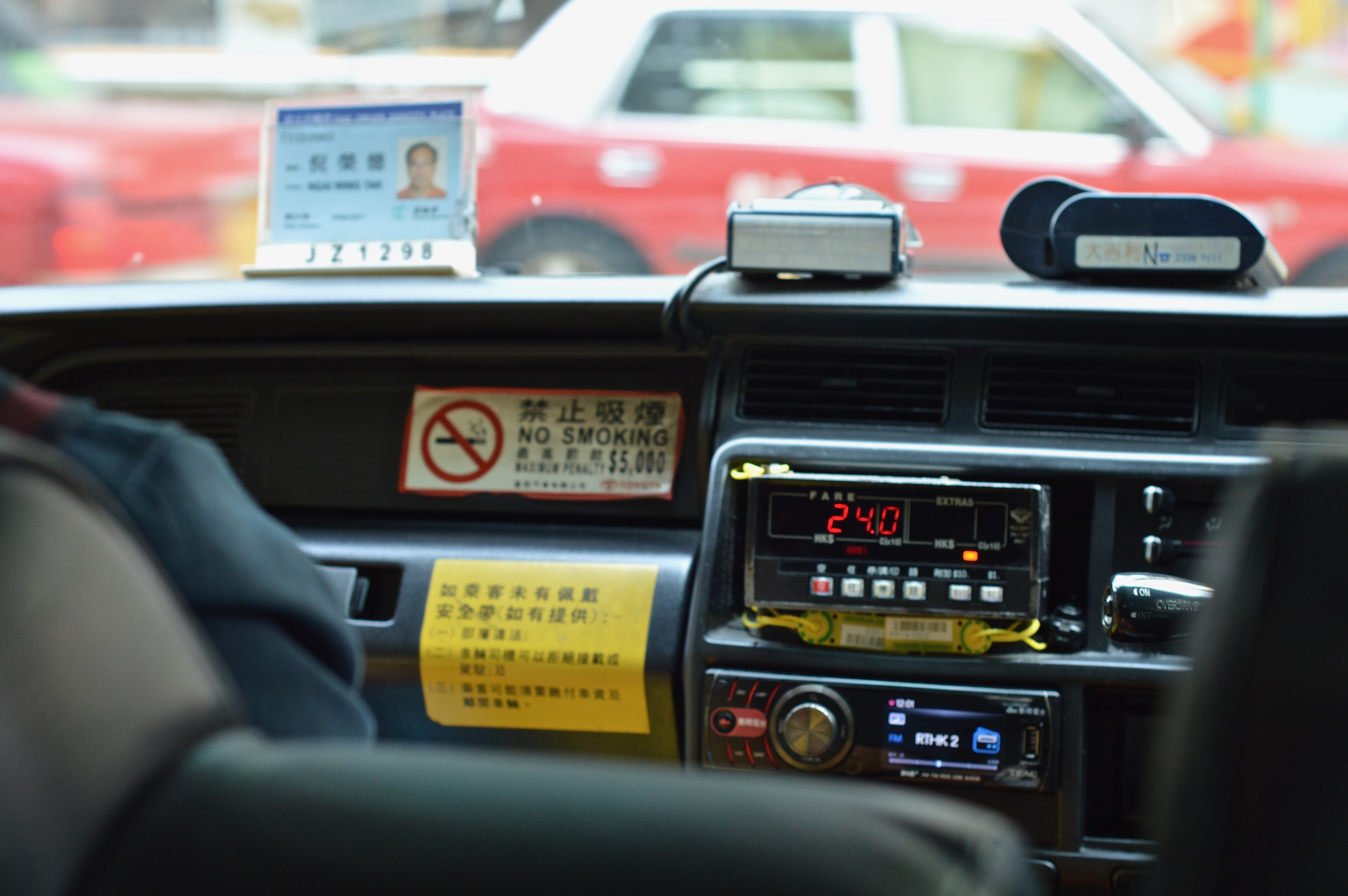
Inside one of the iconic taxis. Jenn Ko, 2017.
Pok Fu Lam village of 2018 looks a lot like it did before the islands of Hong Kong were ceded to the British empire over 150 years ago. It is one of the oldest in the city and is designated on the World Monuments Fund’s Watch List of places to be preserved. Parts of the village are considered squatter settlements. It even lacks a modern sewage system. Efforts to conserve its architectural heritage face pushes for land development in the crowded and growing metropolis. Jenn Ko, 2017.
Blake Pier, the ever-popular tourist destination of Stanley Bay. The pier was named after Sir Henry Arthur Blake, the twelfth governor of Hong Kong. Jenn Ko, 2017.

Authenticity

During my defence, someone on my examination board asked me an interesting question.

What is an an authentic TCM?

The wonderful thing about the defence is the freedom and space to reexamine and reconsider issues you yourself may not have considered yourself. Answering the examiner’s question led me to put together an important part of my final conclusion.

The question of authenticity in TCM is recurring throughout this thesis. On a practical level, governments (wanted) to legislate and regulate TCM to assure safety and authenticity for public health. On a personal level, TCM users questioned the authenticity and efficacy of the herbal medicines they were purchasing and consuming. An authentic TCM in a greater global, historical context, however, is a more delicate matter and therefore problematic to define. Considering Schechner’s concept of “twice-behaved” behaviour, each reiteration of an act is a novel original; authentic from the first. This begs the question—what was the first “behaved” iteration of traditional Chinese medicine? Perhaps one could credit the 2,000 year old Yellow Emperor’s Inner Canon or Huángdì Nèijīng (黃帝內經) as the first authentic record of TCM, but the book itself is based on nearly 4,500 years of practice.

Perhaps Nora would recognize this set of ancient, communal practices on which the Yellow Emperor’s Inner Canon is based as acceptably authentic milieux. Scholars and TCMPs have termed the practice of TCM in pre-Cultural Revolution in China and preserved elsewhere in post-Cultural Revolution Chinese diasporas “Classic” Chinese medicine. However, this claim would negate the authenticity of translocal reiterations of TCM, which have morphed and adapted to regional environments in Hong Kong, Taiwan, and Toronto, for example. In the same vein, my participants expressed a belief that TCM preserved in the peripheries is measured as more authentic than TCM in modern China, which has been systematically blended with Western medicine. Nevertheless, such comments disregard the periphery’s own disparate pathways to the westernization of TCM. Thus, this thesis argues that there is a singular ‘authentic’ TCM does not exist, as each iteration of the practice is as validly genuine as the other. 

Debates about authenticity have implications for belonging and otherness in cultural identity and the construction of Chineseness. Claims to authenticity have been used by power-wielding entities to position TCM practitioners and users between legitimate and illegitimate, us and them. In early twentieth century China, various governments attempted to regulate practice and practitioners to carve and sculpt the populace into their vision of a modern China. Towards the end of the twentieth century in Ontario, the Ontario government regulated TCM in an effort to gently fit practice and practitioners cohesively into the larger Canadian medical system. Therefore, accepting that authenticity in TCM is amorphous, uneven, and in constant renegotiation, one could also postulate that Chineseness is similarly resistant to clear definition. 


This post is Part Three of a five-part series, where I use a blog format to present and elaborate themes less-explored in my M.A. in History thesis. 

On Chinglish: Thoughts on Oral History and Language

If I had more time to write and more pages to fill, I would have liked to analyze the question of language in oral history in working with Chinese diasporas. Language was a notable point of contention and interest at various stages of my research project.

I should mention my capacities in Cantonese. I can understand Cantonese fluently. I can speak with advanced skills, but my Canadian accent makes me nervous and often causes words to slip my mind. I cannot read or write except for basic characters like me, you, numbers, and random trivia. 

Bilingualism was a concern for me even as I was preparing to interview. I had to recruit and prepare information for my participants in both English and Chinese. In the interviews, my participants would switch between English, Cantonese, and very rarely, Mandarin. Their combination of languages — of “Chinglish” was familiar to me as the child of immigrant children. 

For my interviews in Canada, my participants would prefer to use English, even if they were more fluent in Cantonese and they understood that I could understand them in Chinese. They would switch to use Cantonese when using TCM terms. 

For my interviews in Hong Kong, my participants would prefer to use either English or Cantonese. They were mostly conducted in Cantonese, even though their English was fluent. They would switch to English to describe certain colloquial idioms or phrases to add colour to a feeling, emotion, or experience. Their preference for English was for my sake. My spoken fluency in both Cantonese and English was useful when conducting interviews with participants, especially when one idea could not be translated into the other, or in other characteristically Hong Konger ‘Chinglish’ moments. However, my inability to read and write in Chinese strained the subsequent transcription process.

Language was contentious during the transcription of my interviews. Because I was unable to read or write in Chinese, I first tried to transcribe my interviews using a third party referred to my by my father. The transcriptionist/translator was a university student in Toronto who was raised in Canada but was fluent in both languages. I paid them to do transcription, them translation of anonymous interviews. They were ultimately unreliable and eventually I begged my father to help me do the work with the assistance of Google Translate and Pleco.

During the translation process, which I worked with my father on, we had many discussions about what exactly a word or phrase would be translated into. This process really taught us both a lot about language and meaning. 

During the writing and analysis portion of my project, I became interested in when and why participants would use English or Cantonese or both. Perhaps for a different paper I would focus more on the nuances of language and TCM. 

For example, TCM is increasingly being learned, used, practised by people who have zero Chinese language skills. As I mention in my paper, there are many concepts in TCM that are not fully explained in English. The terms, while translatable, also come with particular etymologies. They are used in particular daily conversations and experiences, that add meaning to the TCM term. How does the untranslatable change the thousands-year-old practice? What is lost? What is gained? 


This post is Part Two of a five-part series, where I use a blog format to present and elaborate themes less-explored in my M.A. in History thesis.